


Artificial Intelligence (AI) has quietly become one of the most influential technologies shaping modern life. While many people imagine AI as something futuristic or highly technical, the reality is far more subtle: AI is already integrated into your everyday routines, working silently in the background to make life easier, faster, and more efficient. You may not always notice it, but AI enhances nearly every digital interaction you have — from the moment you unlock your phone to the second you go to sleep.
Unlike traditional software, AI is designed to learn from your behavior. It observes your preferences, adapts to your habits, and continuously improves its accuracy the more you use it. This makes AI feel natural and intuitive, blending into daily activities so seamlessly that most people don’t even realize how often they depend on it. Whether you’re browsing social media, navigating to work, managing finances, or checking emails, AI is constantly assisting you in ways that save time and reduce effort.
This article breaks down five powerful ways AI helps you every day. These explanations are evergreen, meaning they remain relevant regardless of how technology evolves. If you want to explore more AI-related insights, you can visit the Artificial Intelligence section on ByteToLife.com.
1. Personalized Recommendations That Understand You
Personalized recommendations are one of the most common examples of AI in daily life, yet many people don’t recognize how sophisticated these systems are. Every time Netflix suggests a movie that feels perfect for your taste, or Spotify curates a playlist that matches your mood, AI is analyzing your behavior behind the scenes. It tracks what you click on, what you skip, how long you watch or listen, and which genres you consistently return to.
AI uses pattern recognition and predictive modeling to understand what you enjoy. For example, if you frequently watch documentaries late at night but prefer comedies on weekends, the system will adjust your recommendations accordingly. This applies not only to entertainment platforms but also to online shopping, where AI suggests products based on browsing habits. Even search engines rely on AI to interpret your intent and deliver results tailored specifically to you.
The benefits of AI-powered recommendations include saving time, discovering new interests, and receiving content that truly resonates with your lifestyle. Instead of scrolling endlessly, AI brings relevant content directly to you. Over time, the system becomes more accurate as it continues learning from your activity. This creates a digital environment where everything feels more personalized, intuitive, and aligned with your preferences.
Many industries use recommendation AI, including e-commerce, education, finance, social networks, and even job platforms. These systems enhance user experience by filtering vast amounts of information and presenting only the most relevant results. Without AI, navigating digital platforms would be far more time-consuming and overwhelming.
2. Smart Assistants That Simplify Everyday Tasks

Smart assistants like Siri, Alexa, and Google Assistant have transformed how people interact with technology. Instead of manually typing commands or navigating through menus, you can simply speak naturally, and AI will understand what you need. These assistants use natural language processing (NLP) to interpret context, tone, and intent — not just keywords.
For example, when you say “Remind me to call my friend this evening,” the assistant identifies the action (a reminder), the subject (calling someone), and the timing (this evening). It then sets the reminder without requiring additional input. This level of contextual awareness makes smart assistants extremely helpful in daily life. You can ask them to set alarms, control smart home devices, play music, send messages, check facts, or provide quick updates — all hands-free.
As AI learns your routines, it begins offering suggestions without being asked. If you often set an alarm at the same time, the assistant may propose automating it. If you regularly forget tasks, AI may remind you earlier. This predictive assistance allows smart assistants to act like digital companions that support productivity and improve efficiency.
Smart assistants also integrate with a wide ecosystem of devices. You can control lights, adjust thermostats, lock doors, or monitor home security using simple voice commands. This makes daily routines more convenient and reduces the time spent performing repetitive tasks. If you’re curious about how AI enhances digital productivity, you can explore guides like AI Tools Transforming Office Tasks.
3. Email Filtering That Protects and Organizes Your Inbox
Email is essential for work, communication, and daily life — but it also attracts a massive amount of unwanted messages. Without AI, your inbox would quickly become filled with spam, scams, and harmful links. AI-powered email filtering systems sort through incoming messages by analyzing patterns, language, sender history, and potential risks.
Modern email services rely on AI to identify which messages deserve your attention and which ones should be blocked. AI scans emails for warning signs such as suspicious links, grammatical anomalies, unusual sender addresses, or phrases commonly used in phishing attacks. When it detects something unsafe, the message is flagged or moved to the spam folder automatically.
The system also learns from your behavior. If you often open messages from a specific sender, AI will mark them as important. If you always delete a certain type of email, AI will begin filtering them out more aggressively. This adaptive learning protects your inbox while ensuring that essential messages remain easy to find.
AI does more than just block spam — it categorizes your inbox into sections such as Primary, Updates, Social, or Promotions. This makes email management far more efficient. Instead of manually sorting messages, AI organizes them for you, saving time and reducing frustration. To explore more about digital safety, you can check the Cybersecurity section on ByteToLife.com.
4. Navigation Apps That Help You Travel Smarter
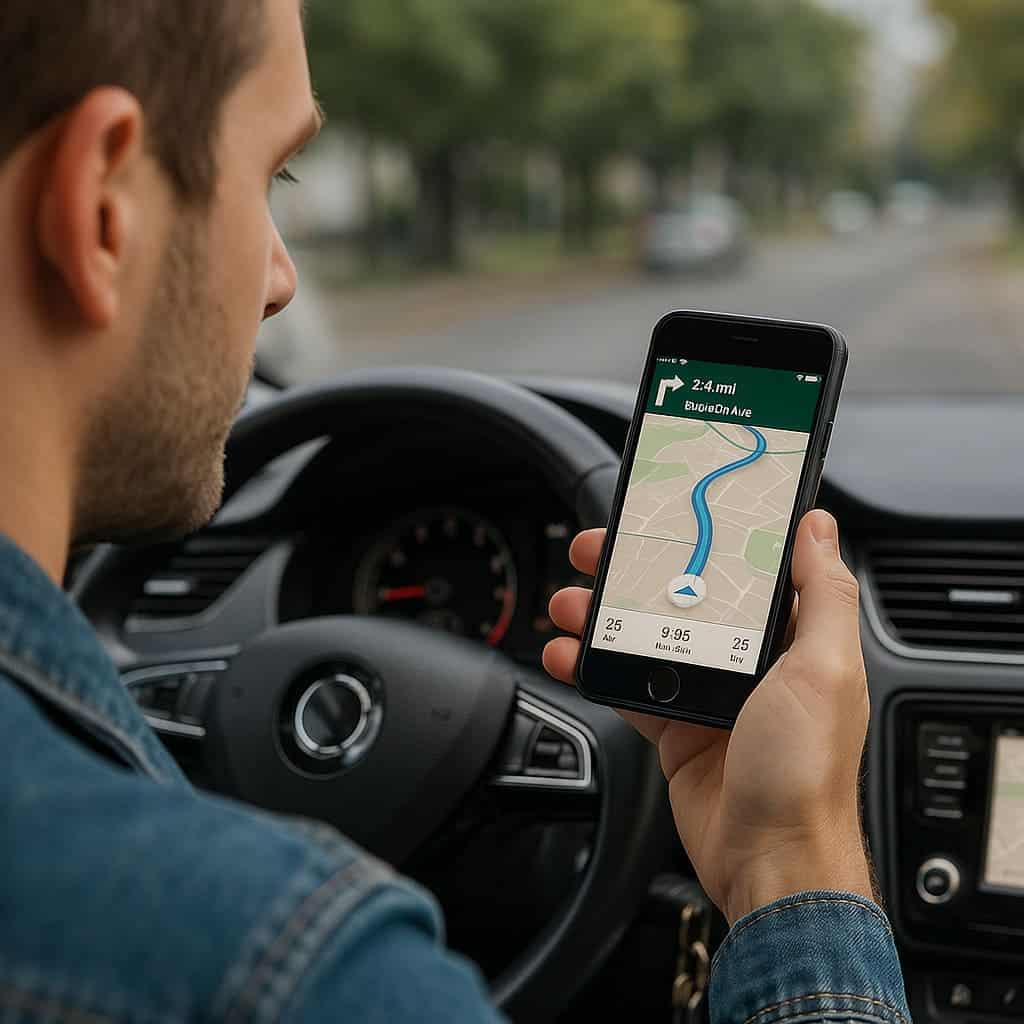
Navigation apps like Google Maps and Waze are among the best examples of AI working quietly in the background. These apps analyze enormous amounts of real-time data, including traffic speed, road conditions, construction updates, accident reports, and route popularity. AI processes all this information in seconds to calculate the fastest, safest, and most efficient route to your destination.
AI can detect sudden changes in traffic and immediately reroute you to avoid delays. If congestion occurs or an accident happens, the app adjusts your estimated arrival time and suggests alternatives. This predictive capability ensures you make informed decisions on the road and arrive on time more consistently.
Navigation AI also learns your habits. If you frequently visit certain locations, the app may start suggesting routes before you even open it. It analyzes what time you usually leave home, how fast you drive, and which roads you prefer — then uses this data to optimize future recommendations.
This technology is invaluable not only for daily commuters but also for travelers, delivery drivers, emergency responders, and ride-share services. Without AI, maps would simply display static information. But with AI, navigation becomes dynamic, intelligent, and incredibly responsive to real-world conditions.
5. AI That Enhances Your Online Security

Online security has become one of the most important areas where AI plays a crucial role. With cyber threats on the rise, traditional security systems struggle to keep up. AI, however, analyzes billions of data points in real time, identifying unusual behaviors and stopping threats before they cause harm.
Banks, payment apps, and major platforms use AI to detect suspicious activities instantly. For example, if your account suddenly logs in from an unfamiliar device or attempts a transaction that doesn’t match your normal spending habits, AI flags the activity and may freeze it automatically. This prevents fraud and protects your financial information.
AI also powers biometric authentication such as facial recognition and fingerprint scanning. These systems verify your identity more accurately than traditional passwords. Because they analyze unique physical features, AI-driven biometrics make your devices significantly more secure.
AI continuously updates itself by learning from new threats, making it one of the most effective digital protection tools available today. It operates silently, monitoring your accounts, passwords, and browsing behavior without interrupting your daily activities.
Frequently Asked Questions (FAQ)
AI enhances your routines by analyzing patterns, personalizing recommendations,
blocking spam, guiding navigation, and improving online security—all quietly in
the background.
Platforms like Netflix and Spotify use AI to study your viewing or listening habits.
They analyze your likes, skips, watch time, and favorite genres to suggest content
that matches your preferences.
Yes. Smart assistants rely on natural language processing and machine learning
to understand your commands, respond to context, and automate tasks based on
your habits.
AI filters incoming emails by scanning for spam patterns, suspicious links,
risky senders, and phishing signals. It automatically organizes your inbox
to protect you from harmful content.
Navigation apps use AI to analyze real-time traffic, speed patterns, accidents,
and road conditions. AI updates your route instantly to help you avoid delays
and travel more efficiently.
Absolutely. AI monitors login behavior, detects unusual activity, prevents
fraudulent transactions, and powers biometrics like facial and fingerprint
recognition to keep your accounts secure.
Yes. AI continues to evolve and is expected to play an even bigger role in
communication, home automation, personal productivity, healthcare,
and online security in the future.
Conclusion
AI plays a larger role in your daily life than you might realize. From personalized recommendations and smart assistants to email filtering, navigation support, and advanced online security, AI enhances your routines in subtle yet powerful ways. It saves time, improves safety, reduces effort, and creates a more intuitive digital experience.
As AI continues to evolve, understanding how it assists you becomes increasingly important. If you want to explore more about AI, cybersecurity, productivity tools, and future technologies, you can visit ByteToLife.com for more useful guides and resources.