

Searching for information online has become a core part of everyday life. People rely on search engines to answer questions, compare products, learn new skills, and make important decisions. For a long time, this process followed a familiar pattern: type keywords, scan a list of links, and manually decide which pages are worth reading.
That traditional experience is now evolving. With the introduction of AI Mode in Google Search, Google is transforming search into something more intelligent, conversational, and context-aware. Instead of simply ranking web pages, AI Mode helps users understand topics faster by generating summaries, suggesting follow-up questions, and organizing information in a more human-friendly way.
This change marks a significant shift in how people interact with information online. AI Mode does not just influence how users search—it also reshapes how content is discovered, evaluated, and consumed. Understanding this shift is essential for everyday users, researchers, and content creators alike.
What Is AI Mode in Google Search?
AI Mode is a Google Search enhancement that integrates generative artificial intelligence directly into search results. Its main goal is to move beyond simple keyword matching and provide answers that reflect real understanding of user intent.
When AI Mode is activated, users may see an AI-generated overview displayed at the top of the search results page. This overview summarizes information from multiple authoritative sources, offering a clear explanation of the topic before showing traditional organic links.
Rather than replacing websites, AI Mode acts as a guide. It helps users grasp the core ideas quickly, then directs them to relevant sources if they want to explore further.
Key characteristics of AI Mode include:
- AI-generated summaries written in natural language
- Contextual understanding of complex or multi-step questions
- Suggested follow-up queries to deepen exploration
- Supporting links from trusted and relevant sources
This approach makes search feel more like a conversation than a technical task.
How AI Mode Works Behind the Scenes

AI Mode relies on advanced machine learning systems that analyze language, meaning, and context at scale. Instead of ranking pages purely based on keywords and backlinks, Google’s AI evaluates how well content answers a specific question.
At a deeper level, this process relies on technologies similar to those used in multimodal AI systems, which combine language understanding with contextual reasoning.
When a user submits a query, AI Mode performs several processes almost instantly:
- Interprets the intent and context of the query
- Identifies authoritative and reliable sources
- Cross-checks information across multiple documents
- Generates a concise summary using natural language
- Suggests related questions based on common user behavior
This system helps reduce information overload. Instead of forcing users to compare dozens of pages, AI Mode highlights the most relevant insights upfront.
Core Technologies Powering AI Mode
Several foundational technologies enable AI Mode to function effectively:
- Large Language Models (LLMs) – are advanced AI systems designed to comprehend written language and produce text that closely resembles how humans communicate.
- Semantic Search – Helps AI recognize meaning rather than just keywords.
- Google Knowledge Graph – A structured database that connects entities such as people, places, and concepts.
Google provides official guidance on how structured data supports search understanding: Google Structured Data Documentation.
Why AI Mode Matters for Everyday Users
For most users, AI Mode fundamentally changes how information is accessed. Instead of spending time clicking through multiple pages, users can gain clarity from a single, well-structured overview.
These changes reflect a wider trend where AI tools are transforming everyday productivity by reducing friction and speeding up decision-making.
Faster Access to Answers
AI Mode delivers key points immediately. This is especially useful for informational queries, comparisons, and learning-focused searches.
More Natural Search Behavior
Users no longer need to phrase queries like search engines. AI Mode understands conversational language, making search easier for beginners and non-technical users.
Improved Learning Experience
Students and self-learners benefit from summaries that break down complex topics into digestible explanations, while still offering links for deeper study.
The Psychology of Search Intent in AI Mode

One of the most important changes introduced by AI Mode is how it interprets search intent. Traditional search often relied on keyword signals, but AI Mode focuses on understanding why a user is searching.
Search intent generally falls into several categories:
- Informational – The user is seeking knowledge, explanations, or insights about a specific topic.
- Navigational – The user wants to reach a specific website or platform
- Comparative – The user wants to evaluate options or differences
- Transactional – The user is close to making a decision or purchase
AI Mode excels at informational and comparative intent. It identifies patterns in how users ask questions and delivers responses that match those psychological needs.
This shift means content that clearly addresses user intent—not just keywords—has a better chance of being surfaced in AI-driven search results.
What AI Mode Means for Content Discovery
AI Mode changes how content is discovered and prioritized. Visibility is no longer determined only by ranking positions but also by how well content contributes to AI-generated summaries.
Content that performs well in AI Mode typically:
- Answers questions clearly and directly
- Uses logical structure with headings and lists
- Demonstrates subject-matter expertise
- Provides accurate and trustworthy information
This shift reinforces Google’s emphasis on content quality, originality, and trust in AI-powered search environments.
Google emphasizes these qualities through its E-E-A-T framework (Experience, Expertise, Authoritativeness, Trustworthiness). Official guidance is available here: Google Helpful Content Guidelines.
The Impact of AI Mode on Publishers and Organic Traffic

One of the biggest questions surrounding AI Mode is its impact on publishers and website traffic. Traditional search rewarded pages that ranked highly in organic results, often driving significant clicks to individual articles. AI Mode introduces a new layer where information can be summarized before users ever click a link.
This shift creates both challenges and opportunities. On one hand, some users may feel satisfied with AI-generated summaries and choose not to visit external websites. On the other hand, AI Mode still relies heavily on high-quality sources, meaning authoritative content remains essential to the ecosystem.
Publishers that benefit most from AI Mode tend to share several traits:
- They publish in-depth, original content rather than thin summaries
- They demonstrate real expertise and first-hand experience
- They structure content clearly, making it easy for AI to interpret
- They consistently update and maintain accuracy
In this environment, visibility is no longer only about ranking first—it is about being useful enough to be referenced and trusted by AI systems.
AI Mode vs Traditional SEO: What Really Changes?
AI Mode does not eliminate traditional SEO, but it reshapes priorities. Keywords, backlinks, and technical optimization still matter, but they are no longer sufficient on their own.
Traditional SEO focused heavily on:
- Exact-match keywords
- Backlink quantity
- Page-level optimization
AI-driven search places more emphasis on:
- Clear answers to specific questions
- Context and topical depth
- Logical content structure
- Demonstrated credibility and trust
Instead of asking, “Which keyword should I rank for?”, Creators now need to consider, “What issue is the user actually trying to address?” AI Mode rewards content that genuinely helps users understand a topic, not content designed solely to manipulate rankings.
A Practical Content Framework to Perform Well in AI Mode
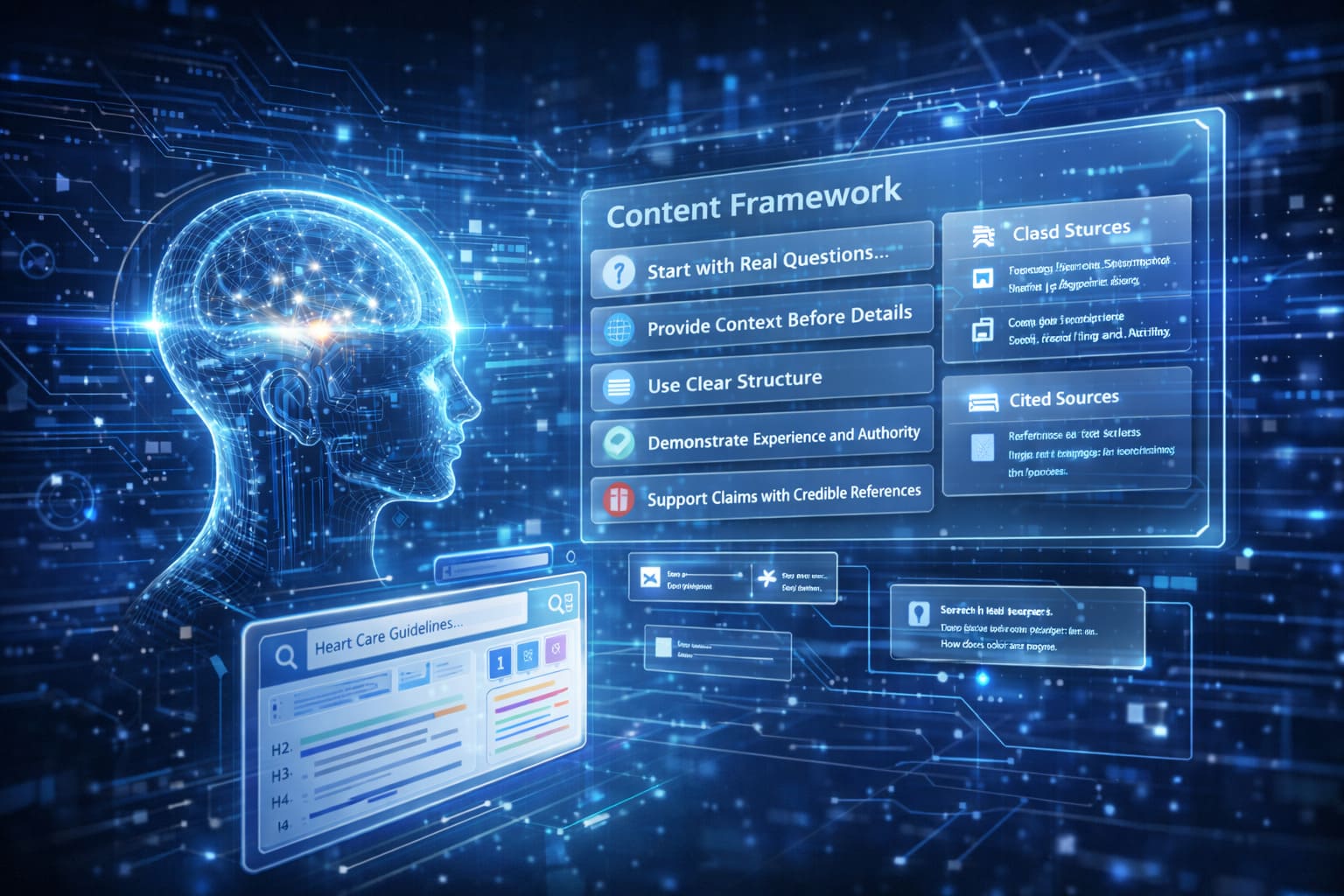
To adapt effectively, content creators should adopt a framework that aligns with how AI Mode evaluates information.
1. Start With Real Questions
Build content around real user questions rather than abstract keywords. AI Mode is optimized for conversational queries, so content that mirrors natural language performs better.
2. Provide Context Before Details
AI systems favor content that explains the “big picture” before diving into specifics. Introductions should clearly define the topic and why it matters.
3. Use Clear Structure
Consistent use of H2 and H3 headings, bullet points, and short paragraphs helps AI understand content hierarchy and relevance.
4. Demonstrate Experience and Authority
First-hand insights, practical explanations, and well-supported claims increase trust. Avoid generic statements that could appear on any website.
5. Support Claims With Credible References
Linking to authoritative sources reinforces credibility. Google itself encourages transparent sourcing: Google Helpful Content Guidelines.
The Role of Structured Data in AI-Powered Search
Structured data plays an increasingly important role in helping AI systems interpret content accurately. While schema markup does not guarantee visibility, it improves clarity and context.
Common schema types that support AI understanding include:
- Article and BlogPosting schema
- FAQ schema for question-based content
- HowTo schema for instructional guides
- Organization and Author schema for credibility
Schema standards are maintained by an open community and can be explored here: Schema.org.
When implemented correctly, structured data helps search engines understand what your content is about, who created it, and how it should be interpreted.
How AI Mode Influences Long-Term Content Strategy
AI Mode encourages a shift away from short-lived, trend-driven articles toward evergreen, foundational content. Pages that provide lasting value are more likely to be referenced repeatedly over time.
Long-term strategies that align with AI Mode include:
- Building topic clusters instead of isolated articles
- Updating content regularly to maintain accuracy
- Focusing on education rather than clickbait
- Creating content that answers follow-up questions naturally
This approach not only supports AI visibility but also builds trust with human readers.
The Future of AI Mode and Search Evolution

AI Mode represents a broader trend toward search engines becoming intelligent assistants rather than simple directories. As AI models improve, search experiences are expected to become more personalized, predictive, and interactive.
We can already observe clear indications of this change throughout the industry:
- Conversational search interfaces
- Voice-based queries and responses
- AI-powered summaries across platforms
Rather than replacing human judgment, AI Mode aims to reduce friction and help users reach understanding faster.
Conclusion: The Future of Search Is Understanding, Not Keywords
AI Mode in Google Search marks a meaningful evolution in how information is discovered and consumed. By prioritizing understanding over simple keyword matching, search becomes more aligned with human curiosity and learning behavior.
For users, this means clearer answers with less effort. For publishers and content creators, it reinforces the importance of quality, structure, and credibility. Those who focus on genuinely helping their audience will continue to thrive as search evolves.
The future of search is not about gaming algorithms—it is about creating content that deserves to be trusted. AI Mode simply makes that truth more visible.
Frequently Asked Questions (FAQ)
AI Mode is a Google Search feature that uses artificial intelligence to understand user intent and generate contextual summaries instead of showing only a list of links. This approach is part of a broader shift toward AI-powered search experiences that prioritize understanding over keyword matching.
Traditional search focuses on ranking pages based on keywords and backlinks, while AI Mode emphasizes context, intent, and relevance. It provides AI-generated overviews that help users quickly understand a topic before exploring individual sources.
AI Mode may reduce clicks for simple informational queries, but it still depends on authoritative sources. Websites that publish in-depth, trustworthy content are more likely to be referenced and discovered. This reinforces the importance of high-quality and original content.
Content creators should focus on answering real user questions, using clear structure, and demonstrating expertise. Creating helpful, user-focused articles—similar to strategies discussed in AI-driven productivity content—can improve visibility in AI-powered search results.
AI Mode is useful for gaining quick understanding and context, but it should not replace critical thinking or original sources. For deeper research, users should always review the linked references and verify information independently.
No, AI Mode does not replace traditional SEO. Instead, it builds on it by rewarding content that is well-structured, credible, and genuinely helpful. This aligns with modern SEO practices that focus on long-term value rather than short-term optimization tricks.