


Remote customer support jobs have become one of the most accessible and stable ways to earn income online. Unlike hype-driven side hustles, customer support roles are built on real demand: companies always need humans to assist customers, solve problems, and maintain trust.
However, the rapid growth of work-from-home opportunities has also created a dangerous downside: fake job listings, phishing interviews, and payment scams disguised as “remote support roles.” This guide exists to solve that problem.
This is a complete, evergreen playbook for finding legitimate remote customer support jobs, understanding how they work, how much they really pay, and how to protect yourself from scams—especially when companies or job keywords suddenly trend online.
What Remote Customer Support Jobs Really Are
Remote customer support jobs involve assisting customers through digital communication channels without working from a physical office. These roles are commonly offered by software companies, e-commerce platforms, telecommunications providers, banks, healthcare services, and global BPO (Business Process Outsourcing) firms.
Common Responsibilities
- Providing multi-channel customer support through live chat, email, and phone
- Resolving billing, account, or technical issues
- Documenting conversations using CRM systems
- Escalating complex problems to higher-level teams
- Following scripts, policies, and quality guidelines
Contrary to popular belief, most customer support roles are not sales jobs. While upselling may exist in some roles, the primary goal is customer satisfaction and problem resolution.
What These Jobs Are NOT
- They are not “get rich quick” schemes
- They are not passive income
- They do not require you to pay to get hired
- They do not involve crypto, investments, or referrals
If a “customer support” job promises unusually high income with no interviews or experience, that is your first red flag.
The Remote Support Job Ecosystem
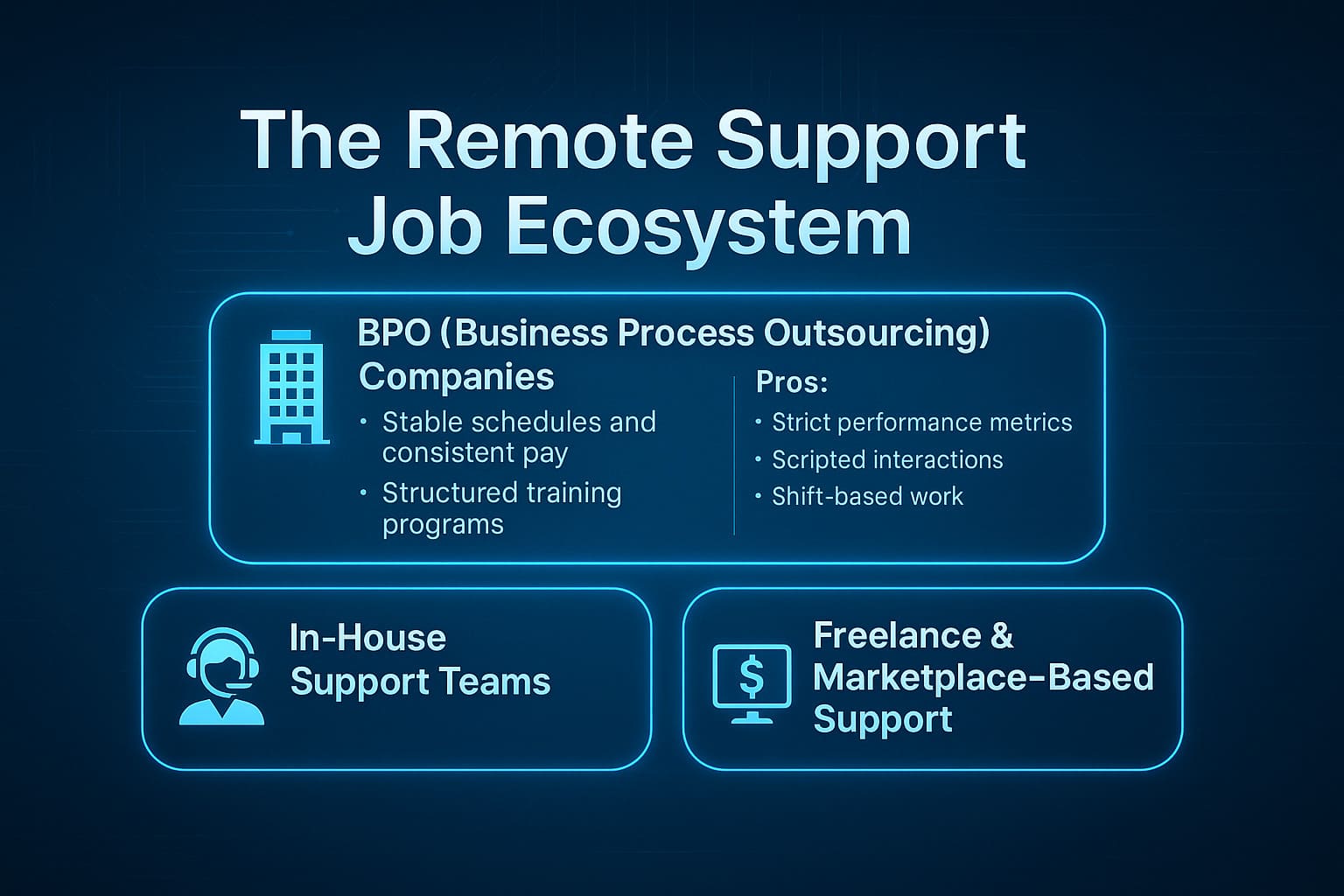
Remote customer support jobs generally fall into three major categories. Understanding the difference is critical to choosing the right opportunity.
1. BPO (Business Process Outsourcing) Companies
BPO companies hire large numbers of support agents and provide services to other businesses. They often handle customer service for banks, airlines, telecom companies, and large tech platforms.
Examples of well-known global BPO firms include Conduent, Teleperformance, Alorica, and TTEC. These companies frequently offer remote or hybrid positions depending on location.
Pros:
- Stable schedules and consistent pay
- Structured training programs
- Clear promotion paths
Cons:
- Strict performance metrics
- Scripted interactions
- Shift-based work
2. In-House Support Teams
Some companies hire support agents directly instead of outsourcing. These roles are common in SaaS, fintech, e-commerce, and subscription-based businesses.
In-house roles often pay more and offer better work-life balance, but competition is higher.
3. Freelance & Marketplace-Based Support
Platforms like Upwork or remote job boards sometimes list customer support gigs. These may be hourly, contract-based, or short-term roles.
This category requires extra caution, as scams are more common on open marketplaces.
Why Remote Customer Support Jobs Are Trending
When a large employer or BPO company suddenly trends on Google, it usually indicates one of three things:
- A large hiring wave
- A system outage affecting customers
- Mass job application interest
This surge often leads people to search for:
- “Is this company hiring remotely?”
- “Application status”
- “Is this job legit?”
Unfortunately, scammers exploit these trend spikes by creating fake job pages, impersonating recruiters, and targeting desperate applicants.
Knowing how to respond during these moments gives you a major advantage.
The 10-Minute Legitimacy Verification Routine
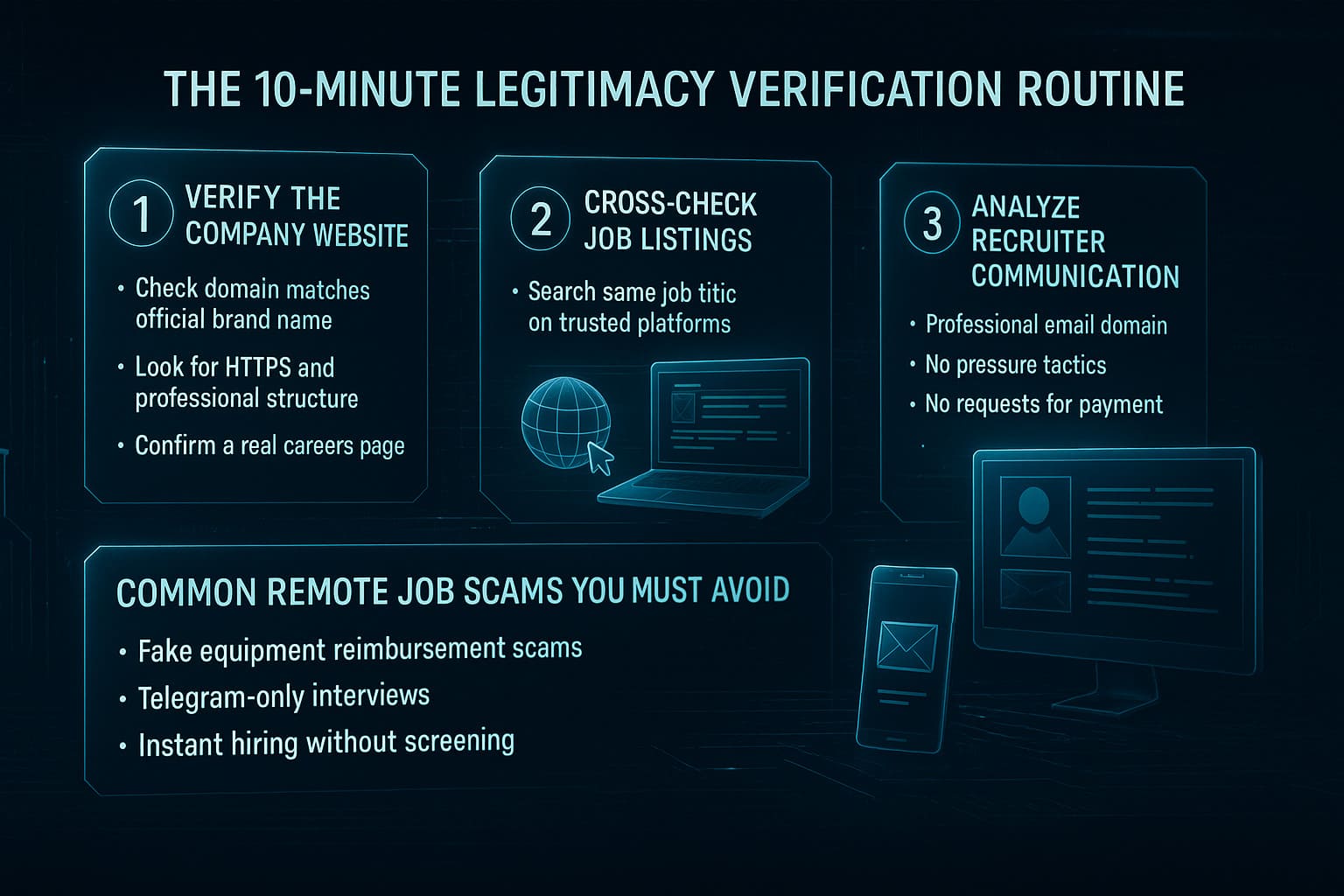
Before applying to any remote customer support job, run this quick verification process. It takes less than 10 minutes and can save you months of stress.
Step 1: Verify the Company Website
- Check that the domain matches the official brand name
- Look for HTTPS and professional structure
- Confirm a real careers page
If a recruiter sends you a job link that is not listed on the company’s official site, assume it is fake until proven otherwise.
Step 2: Cross-Check Job Listings
Search the same job title on trusted platforms like:
If the job only exists on Telegram, WhatsApp, or a Google Form, it is almost certainly a scam.
Step 3: Analyze Recruiter Communication
- Professional email domain (not Gmail or Yahoo)
- No pressure tactics (“limited slots,” “apply now or lose chance”)
- No requests for payment or personal documents upfront
Common Remote Job Scams You Must Avoid
Understanding scam patterns is essential for survival in the remote job market. Below are the most common traps used in fake customer support roles.
Fake Equipment Reimbursement Scam
The scammer sends a fake check or transfer and asks you to buy equipment from a “vendor.” After you pay, the original payment is reversed.
Telegram-Only Interviews
Legitimate companies do not conduct full interviews exclusively via Telegram or WhatsApp. This is one of the strongest scam indicators.
Instant Hiring Without Screening
If you are “hired” without an interview, assessment, or background check, you are not being hired—you are being targeted.
For official guidance, the U.S. Federal Trade Commission maintains an updated resource on job scams: FTC Job Scams Guide.
Security Basics Every Remote Support Agent Must Follow
Working remotely means you are part of a company’s security perimeter. Weak personal security habits can put both your income and your employer at risk.
- Use unique passwords for job portals
- Enable two-factor authentication when available
- Avoid public Wi-Fi for work access
ByteToLife provides free tools to help you stay secure:
Security awareness is not optional—it is part of your professional value.
How Remote Customer Support Jobs Really Pay
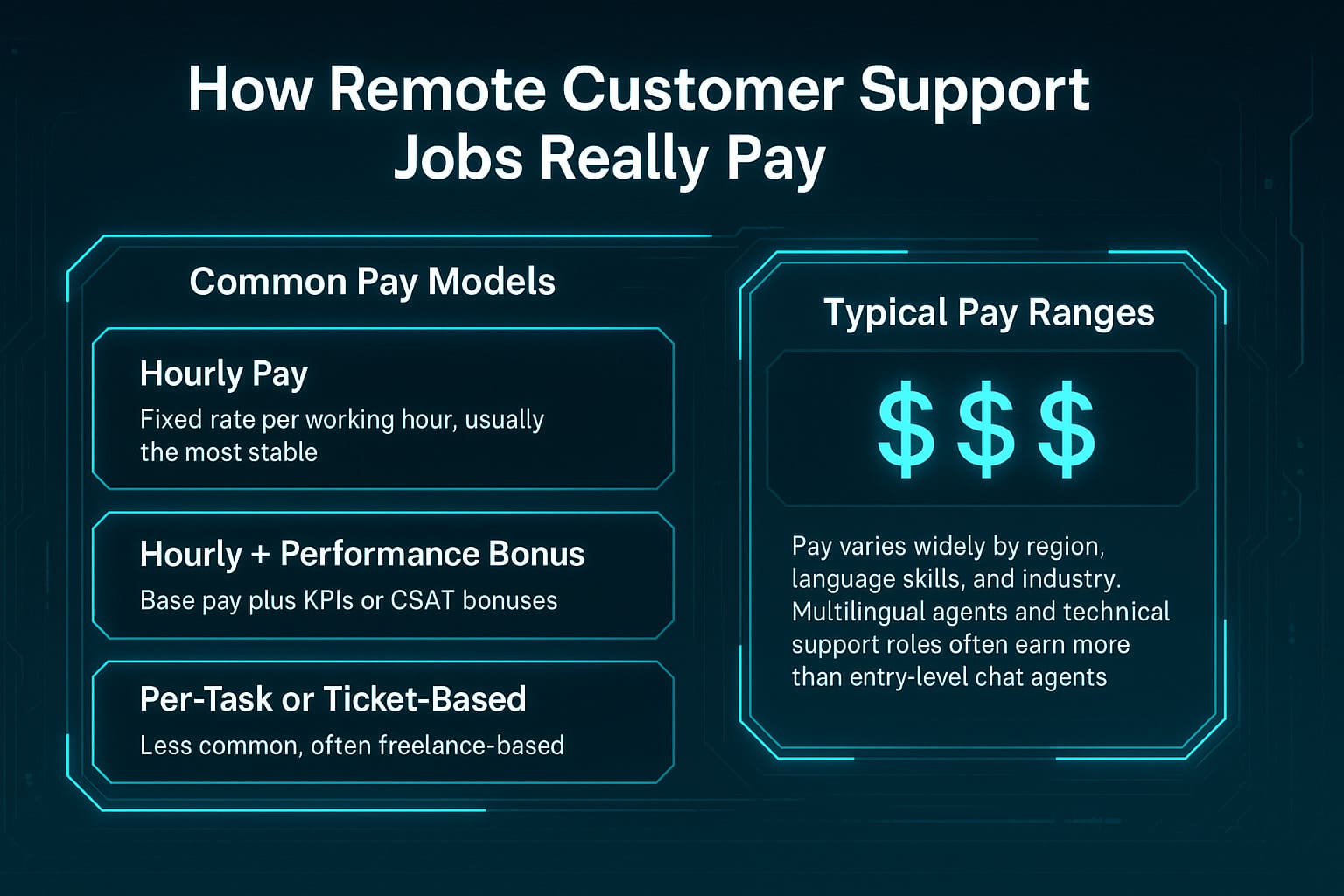
One of the biggest misconceptions about remote customer support work is income expectations. While these roles are not designed to make you rich overnight, they can provide stable, predictable online income when you understand how compensation actually works.
Common Pay Models
- Hourly Pay: Fixed rate per working hour, usually the most stable
- Hourly + Performance Bonus: Base pay plus KPIs or CSAT bonuses
- Per-Task or Ticket-Based: Less common, often freelance-based
Most legitimate BPO and in-house roles pay hourly. If a job claims you will earn only based on commissions or “customer conversions,” it is not a true customer support role.
Typical Pay Ranges
Pay varies widely by region, language skills, and industry. Multilingual agents and technical support roles often earn more than entry-level chat agents.
To estimate your real take-home income after hours, shifts, and deductions, you can use ByteToLife’s free tool: Online Income Calculator .
Shifts, Schedules, and Workload Reality
Customer support is a coverage-based job. This means companies hire based on customer demand, not employee convenience.
Common Shift Types
- Fixed shifts (morning, evening, or night)
- Rotational shifts (weekly or monthly changes)
- Weekend or holiday coverage
Many global companies operate 24/7, which is why night shifts are common—especially for international markets.
Performance Metrics You Will Be Measured On
Support agents are evaluated using clear metrics. Understanding them in advance gives you a huge advantage.
- AHT (Average Handle Time): How long you take per interaction
- CSAT: Customer satisfaction scores
- FCR: First Contact Resolution
- Adherence: Schedule and availability compliance
Good performance is less about speed and more about consistency and accuracy.
What Equipment and Setup Do You Really Need?
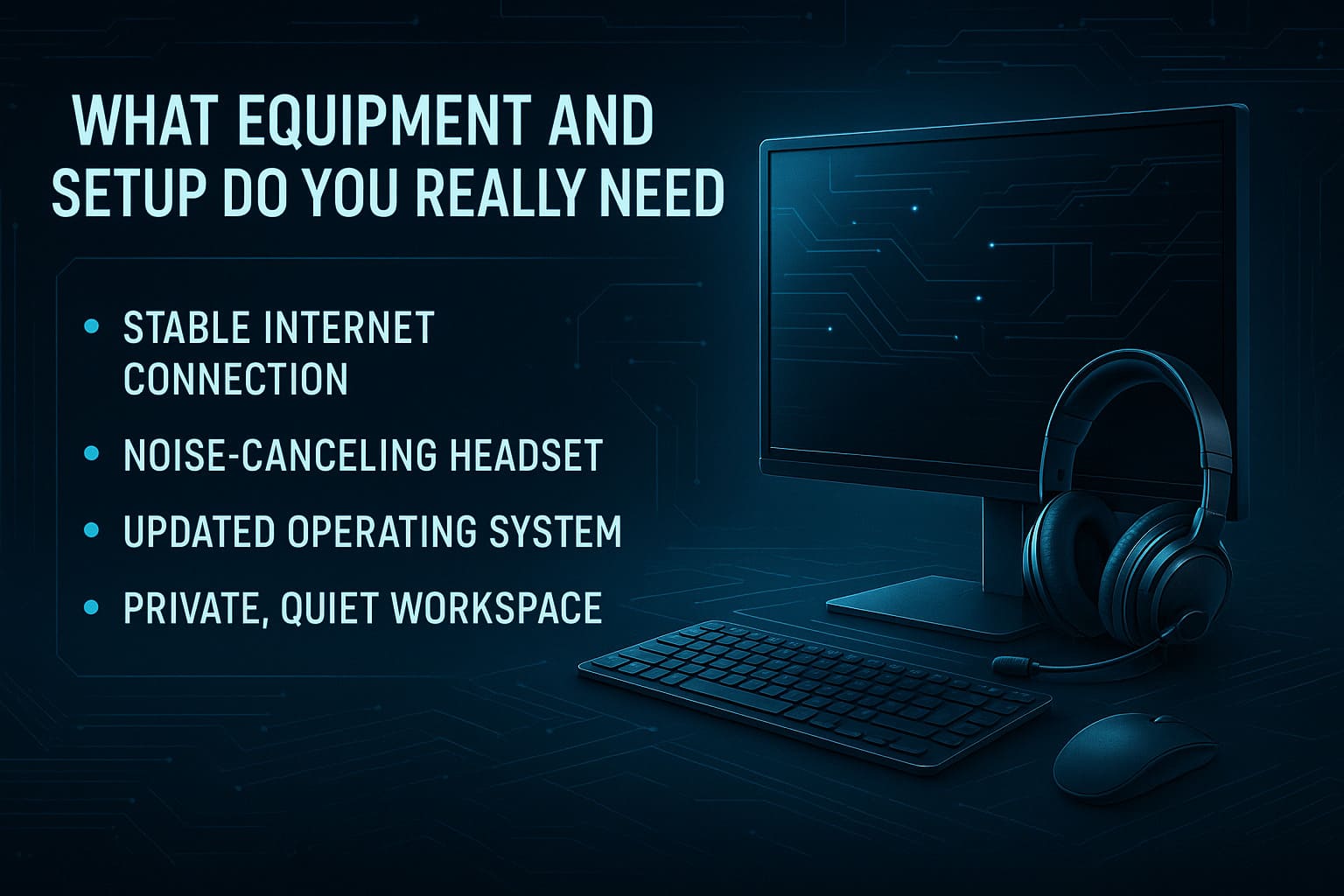
Legitimate employers will clearly state their technical requirements before hiring. You should never be asked to buy equipment from a specific vendor.
Typical Requirements
- Stable internet connection
- Noise-canceling headset
- Updated operating system
- Private, quiet workspace
Some companies provide equipment, while others offer a stipend. Both are normal. Requests for upfront payments are not.
How to Build a Resume That Gets Interviews
You don’t need a perfect resume to start a career in customer support. You need a relevant one.
What Recruiters Actually Look For
- Clear communication skills
- Problem-solving experience
- Customer-facing roles (any industry)
- Basic technical literacy
Resume Tips That Work
- Use simple language, not buzzwords
- Highlight customer interaction, not job titles
- Quantify results when possible
Example:
- “Providing daily support for 50+ customer inquiries via chat and email”
- “Maintained 95% customer satisfaction rating”
Common Pre-Employment Tests and Assessments
Most legitimate remote support roles include one or more screening tests. These are designed to measure skills—not to trick you.
Types of Tests You May See
- Typing speed and accuracy
- English or language proficiency
- Scenario-based problem solving
- Personality or situational judgment tests
There is no need to pay for preparation courses. These tests measure basic competence, not advanced knowledge.
Interview Questions You Should Expect
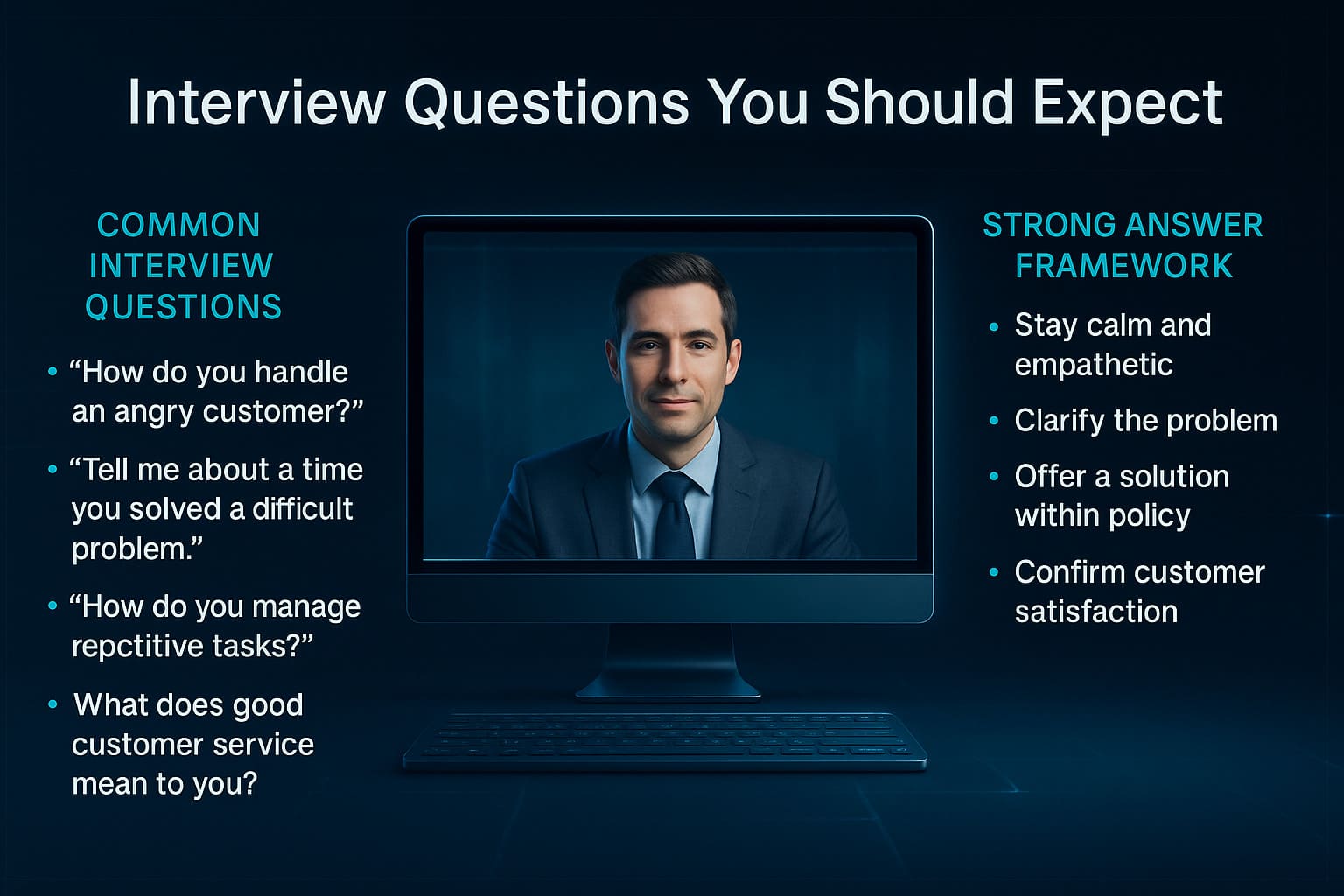
Customer support interviews are usually structured and predictable. Preparing answers in advance reduces stress and improves performance.
Common Interview Questions
- “How do you handle an angry customer?”
- “Tell me about a time you solved a difficult problem.”
- “How do you manage repetitive tasks?”
- “What does good customer service mean to you?”
Strong Answer Framework
- Stay calm and empathetic
- Clarify the problem
- Offer a solution within policy
- Confirm customer satisfaction
Interviewers are not looking for perfection—they want reliability, empathy, and professionalism.
Red Flags During Interviews
Even if the company seems legitimate, interviews can reveal warning signs.
- No video or voice interview at all
- Immediate hiring without discussion
- Requests for personal documents too early
- Pressure to move conversations off official platforms
If something feels rushed or secretive, trust your instincts.
Protecting Your Accounts During Job Hunting
Applying to multiple platforms increases your exposure to data leaks and phishing. Strong account hygiene is essential.
- Use a unique password for each job platform
- Avoid reusing email passwords
- Monitor suspicious login alerts
Use ByteToLife’s security tools to reduce risk:
Getting Paid Safely in Remote Customer Support Jobs
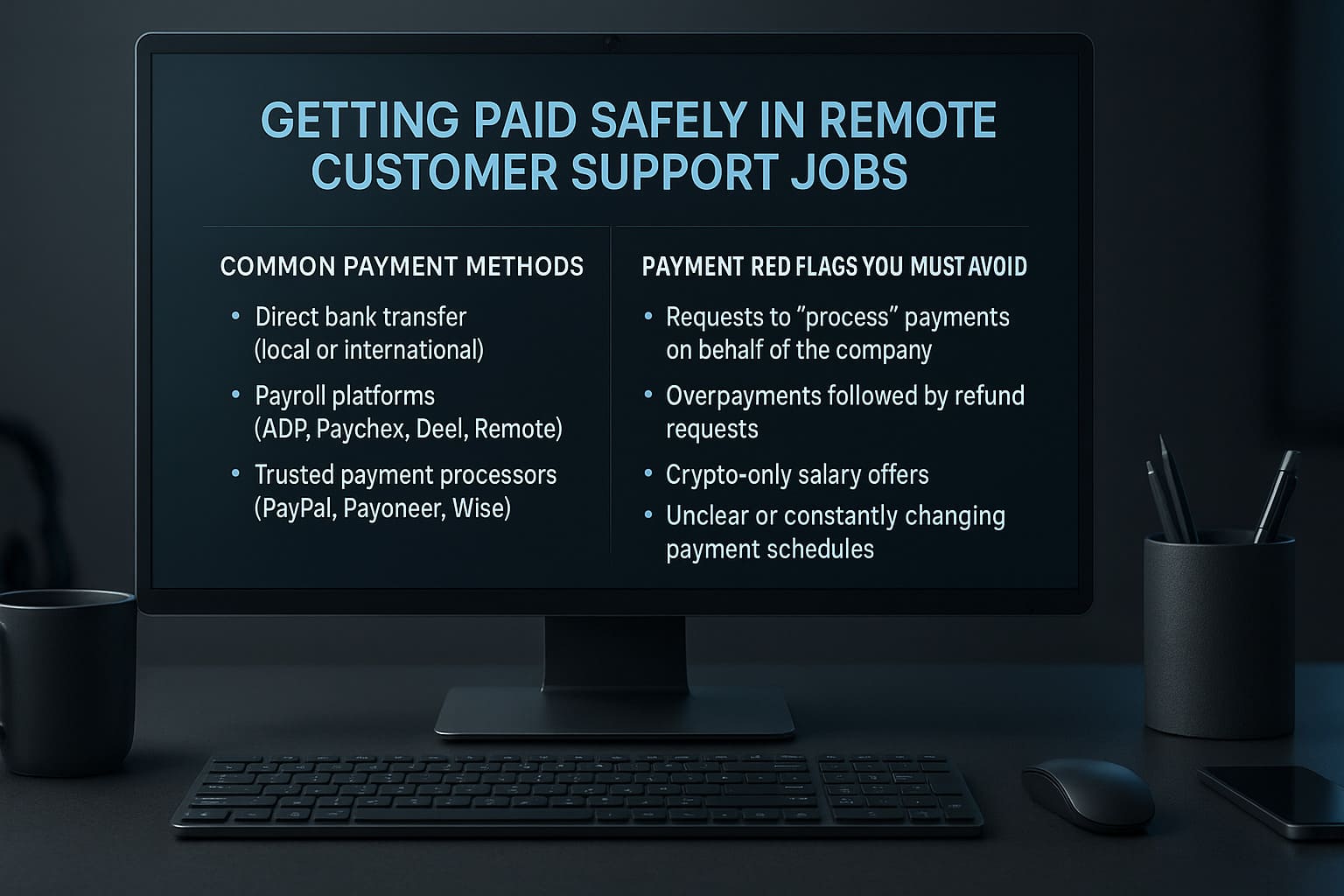
Getting hired is only half the journey. Getting paid safely and consistently is what turns remote customer support work into real, sustainable online income.
Legitimate employers follow clear payment structures and documented payroll processes. Anything outside these norms deserves careful scrutiny.
Common Payment Methods
- Direct bank transfer (local or international)
- Payroll platforms (ADP, Paychex, Deel, Remote)
- Trusted payment processors (PayPal, Payoneer, Wise)
Payments should always come from the company or an officially contracted payroll provider. Being paid “through a manager” or personal accounts is a red flag.
Payment Red Flags You Must Avoid
- Requests to “process” payments on behalf of the company
- Overpayments followed by refund requests
- Crypto-only salary offers
- Unclear or constantly changing payment schedules
If payment details feel confusing, pause and request written clarification. Legitimate companies respect transparency.
Understanding Contracts and Work Agreements
Remote customer support roles usually fall into two legal categories:
- Employee: Salary or hourly pay with benefits and tax withholding
- Independent Contractor: Paid per hour or per project without benefits
What a Legitimate Contract Includes
- Company legal name and address
- Job role and responsibilities
- Compensation details
- Payment schedule
- Termination terms
You should never be asked to sign blank documents or contracts with missing payment details. If unsure, request time to review before signing.
Taxes and Cross-Border Work Considerations
Remote work often crosses borders, which can create confusion around taxes. While rules vary by country, one principle is universal: income earned online is usually taxable.
- Employees often have taxes deducted automatically
- Contractors are usually responsible for reporting income
- Keep records of payments and contracts
If you are unsure about local requirements, consult official government tax resources or a certified accountant in your country.
Career Growth in Customer Support: More Than Just a Job
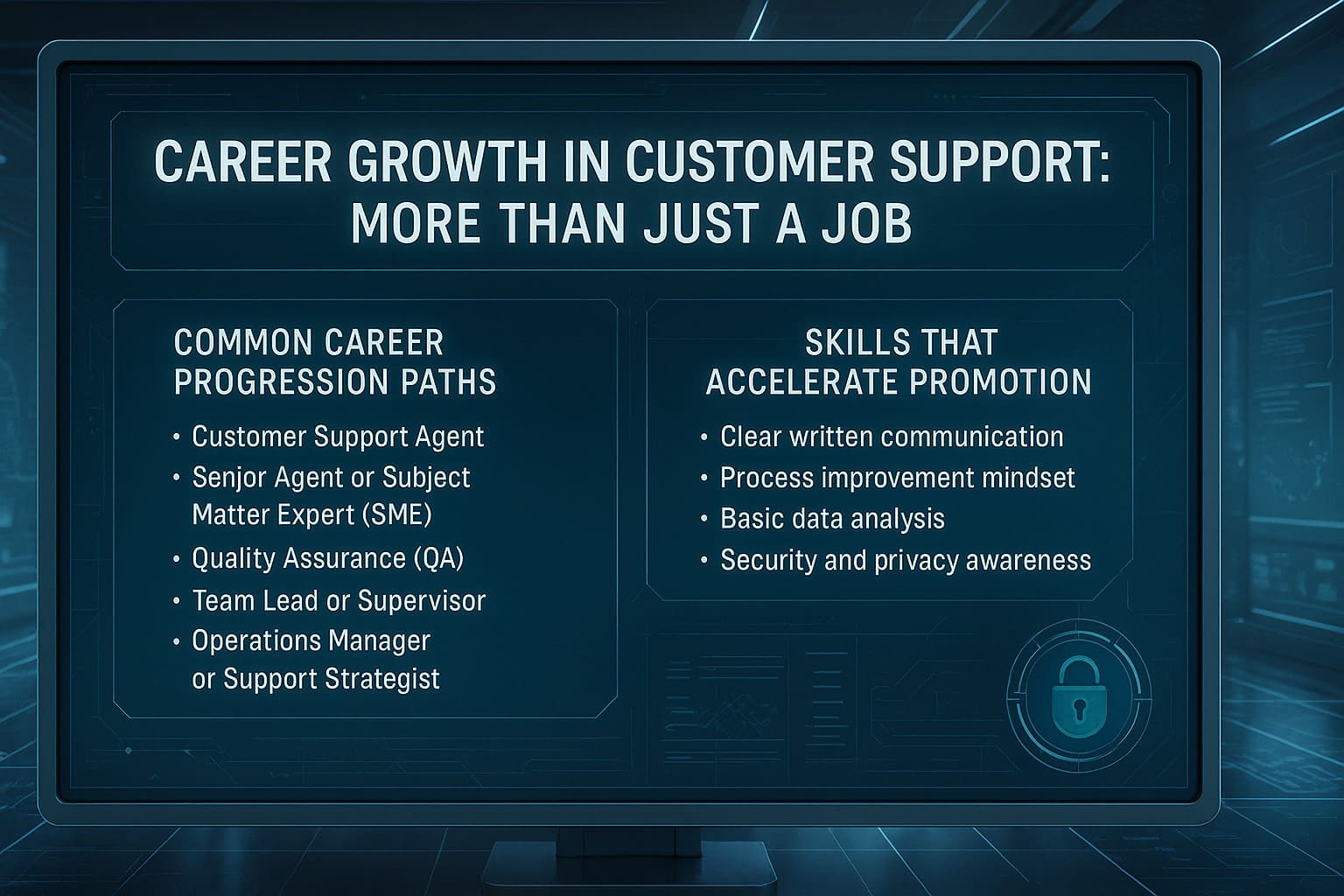
Many people underestimate customer support as “entry-level only.” In reality, it is one of the most scalable remote career paths available.
Common Career Progression Paths
- Customer Support Agent
- Senior Agent or Subject Matter Expert (SME)
- Quality Assurance (QA)
- Team Lead or Supervisor
- Operations Manager or Support Strategist
Others transition into product management, UX research, or customer success roles after gaining frontline experience.
Skills That Accelerate Promotion
- Clear written communication
- Process improvement mindset
- Basic data analysis
- Security and privacy awareness
Customer support is one of the few remote fields where reliability often matters more than formal education.
Staying Secure Long-Term as a Remote Support Agent
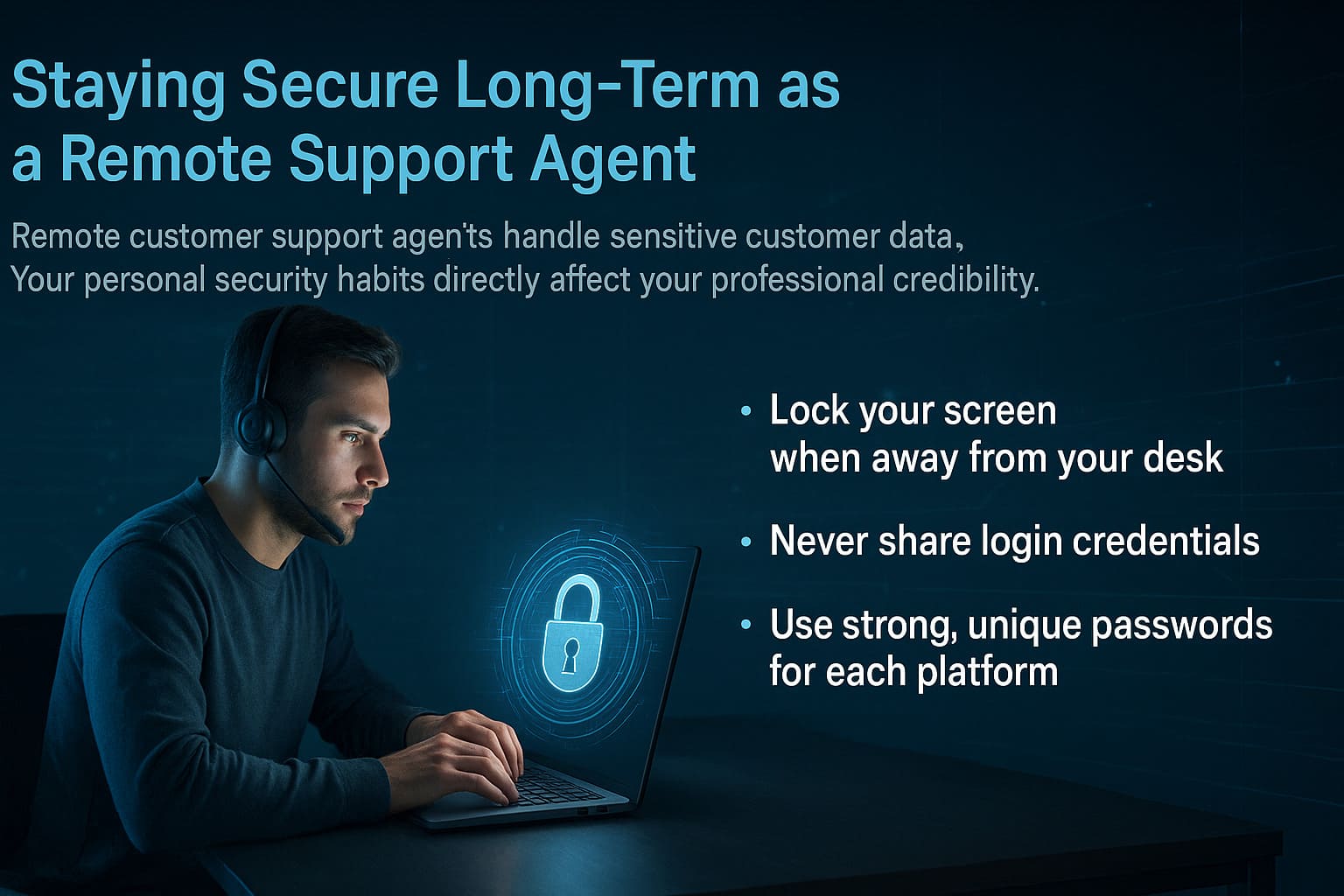
Remote customer support agents handle sensitive customer data. Your personal security habits directly affect your professional credibility.
- Lock your screen when away from your desk
- Never share login credentials
- Use strong, unique passwords for each platform
How to Respond When a Company Suddenly Trends Online
When a company name spikes in search trends, scammers move fast. Here is how to protect yourself during high-traffic hiring moments:
- Apply only through official career pages
- Ignore unsolicited recruiter messages
- Verify job listings across multiple platforms
- Never rush decisions due to “limited slots” pressure
If you suspect fraud, consumer protection agencies such as the Federal Trade Commission provide updated guidance on job-related scams.
Quick-Start Checklist for Legit Remote Customer Support Jobs
- ✔ Verify the company website and career page
- ✔ Cross-check listings on trusted job platforms
- ✔ Never pay to apply or get hired
- ✔ Prepare a customer-focused resume
- ✔ Secure your accounts with strong passwords
- ✔ Read contracts carefully before signing
- ✔ Track payments and income records
This checklist alone can eliminate most remote job scams.
A Real Day in the Life of a Remote Support Agent
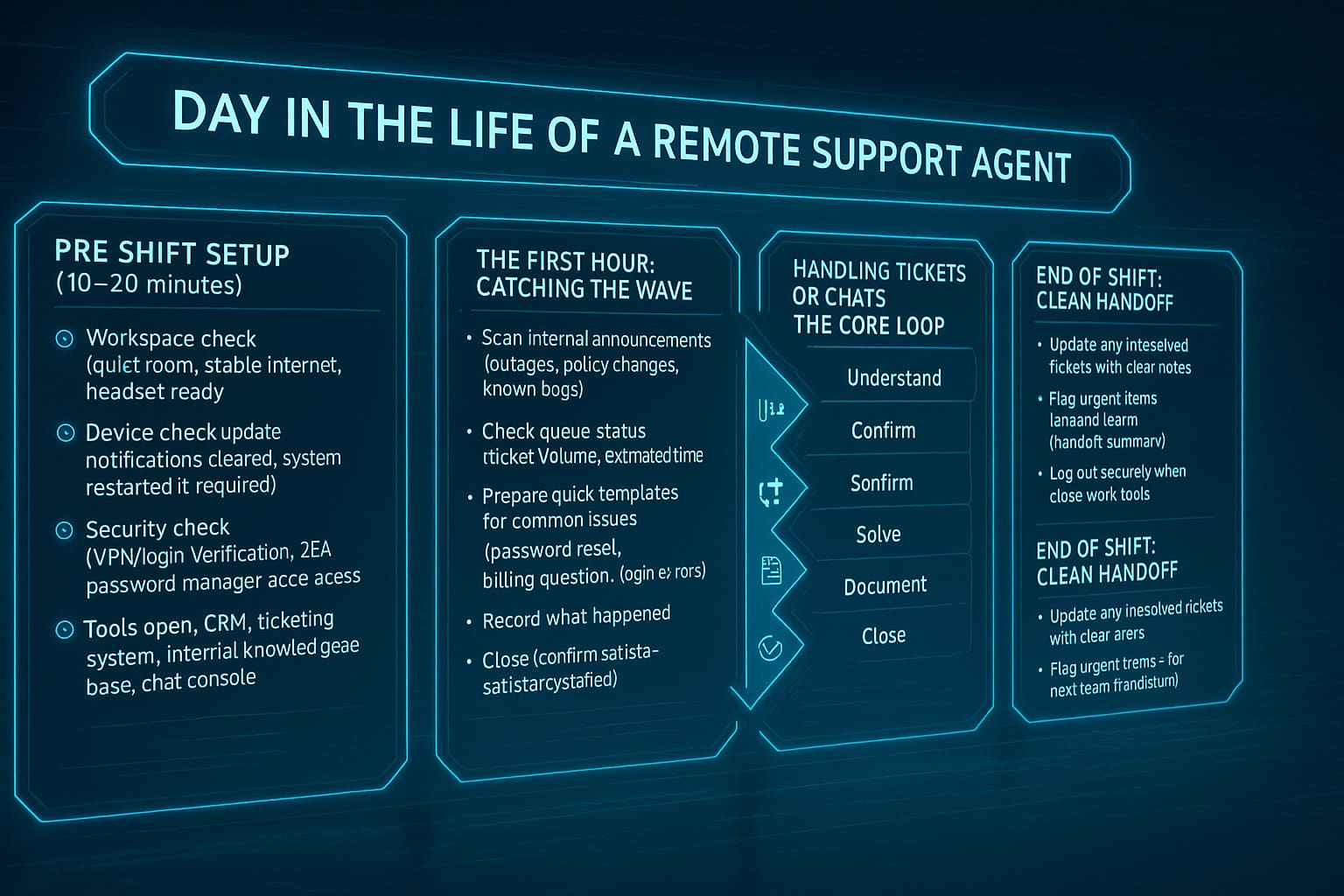
If you’ve never worked in customer support before, it can feel mysterious—like you’re about to log in and improvise all day. In reality, most remote support roles follow a predictable rhythm. The tools are structured, the goals are clear, and the workflow becomes easier once you see what a real day looks like.
Below is a realistic “day-in-the-life” example based on common remote support environments (BPO or in-house). Your exact experience will vary depending on whether your channel is live chat, email, or phone.
1) Pre-Shift Setup (10–20 minutes)
- Workspace check: quiet room, stable internet, headset ready
- Device check: update notifications cleared, system restarted if required
- Security check: VPN/login verification, 2FA, password manager access
- Tools open: CRM, ticketing system, internal knowledge base, chat console
Professional tip: a clean start prevents late “adherence” issues later. Many teams track whether you’re ready exactly at shift start.
2) The First Hour: Catching the Wave
The beginning of the shift often has a surge: customers returning from timezones waking up, billing cycles, or service issues. Your goal is to get into a smooth pace fast.
- Scan internal announcements (outages, policy changes, known bugs)
- Check queue status (ticket volume, estimated wait time)
- Prepare quick templates for common issues (password reset, billing question, login errors)
3) Handling Tickets or Chats: The Core Loop
Most support work is a loop: understand → confirm → solve → document → close. What separates beginners from pros isn’t speed—it’s clarity and consistency.
- Understand: read the customer message carefully, don’t assume
- Confirm: summarize the issue in one sentence to avoid mistakes
- Solve: follow policy, use knowledge base, test steps
- Document: record what happened and what you did
- Close: confirm the customer is satisfied and set expectations
If you’re on phone support, you’ll do the same loop—just faster, and with more “tone management.” If you’re on email support, your writing quality becomes your brand.
4) Mid-Shift: Metrics, Breaks, and Micro-Adjustments
Remote support isn’t just customer conversations. It’s also performance discipline. Good teams build habits that protect your energy and your numbers.
- Take breaks on time (late breaks can hurt adherence)
- Use internal macros/templates (reduces handle time without reducing quality)
- Escalate early when needed (don’t get stuck too long on one issue)
If you find yourself “spiraling” on a complex ticket, the best move is often: document your progress, escalate, and move forward. That’s professional, not lazy.
5) End of Shift: Clean Handoff
- Update any unresolved tickets with clear notes
- Flag urgent items for the next team (handoff summary)
- Log out securely and close work tools (especially on shared devices)
A clean handoff improves team trust—and that matters when promotions or better shifts become available.
Customer Support vs Other Online Income Models
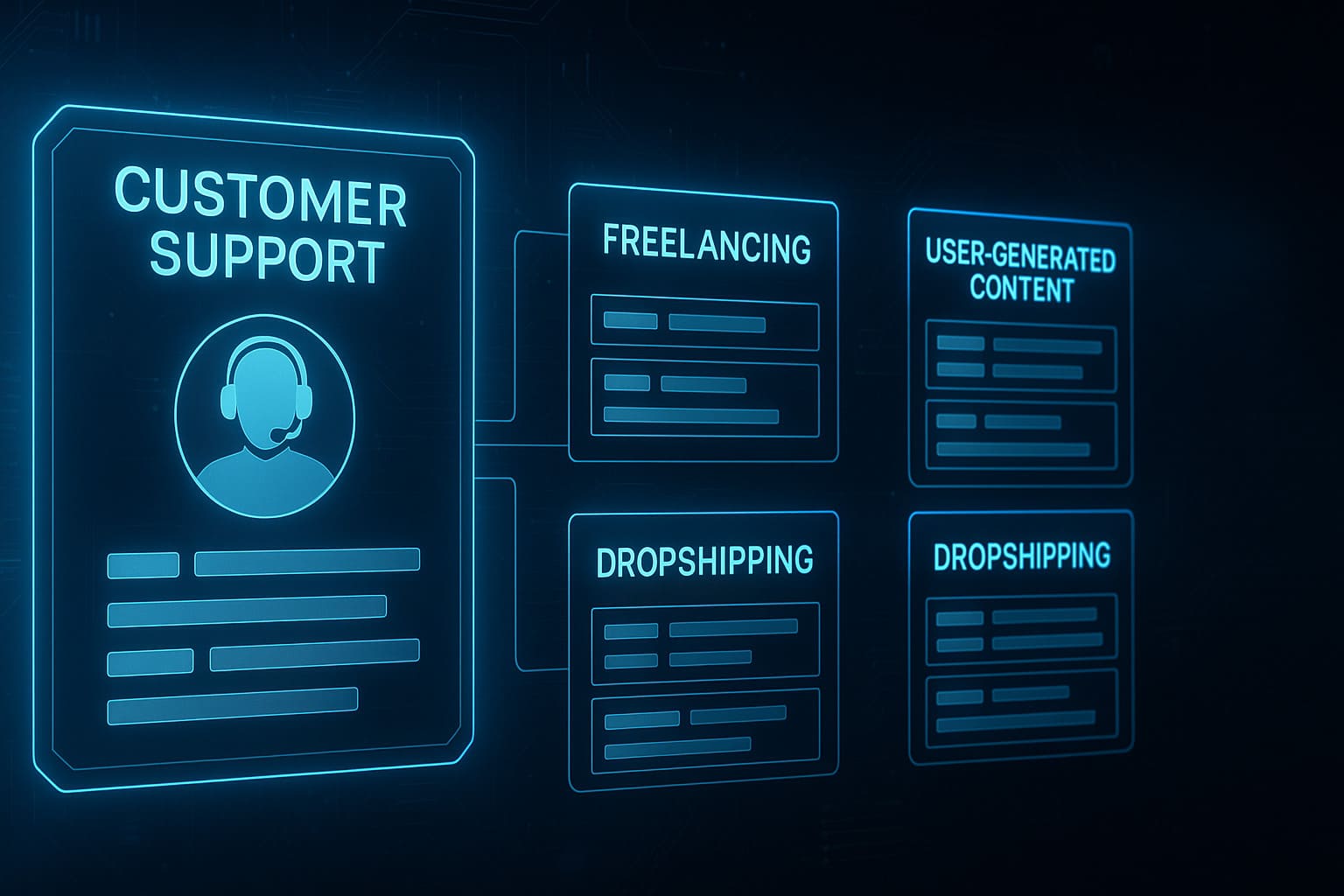
In the Online Income world, customer support is often underestimated because it feels “traditional.” But it has a major advantage: it’s built on ongoing demand. People will always need help with accounts, payments, delivery issues, and technical problems.
Here’s a practical comparison with three popular income paths. This isn’t about which is “best”— it’s about what fits your personality, risk tolerance, and goals.
Customer Support vs Freelancing
- Stability: customer support is usually more stable (scheduled shifts)
- Income: freelancing can scale higher, but income may fluctuate heavily
- Skill barrier: customer support often requires less technical specialization
- Client acquisition: support jobs provide customers; freelancing requires you to find clients
If you want predictable income and routine, support is often a better starting point. If you love building a portfolio and negotiating, freelancing can grow faster long-term.
Customer Support vs UGC
- Consistency: support roles are steady; UGC depends on deals and outreach
- Exposure: UGC can require being on camera; support usually doesn’t
- Creative energy: UGC demands creativity; support demands emotional control and patience
- Scam risk: both can attract scams, but support scams are often “fake hiring” scams
If you prefer structured work without public exposure, customer support is a great match. If you enjoy content creation and building a personal brand, UGC can become a strong income engine.
Customer Support vs Dropshipping
- Upfront cost: support usually requires no capital; dropshipping often needs ads/tools
- Risk: support is lower risk; dropshipping has higher financial volatility
- Time to income: support can pay quickly after hiring; dropshipping may take time to optimize
- Customer stress: support handles angry customers; dropshipping owners handle refunds and delivery issues too
Here’s the truth: if your dropshipping store grows, you’ll eventually need customer support anyway. That’s why support skills remain valuable even if you later transition to entrepreneurship.
To estimate realistic monthly outcomes across different work schedules, you can use: ByteToLife’s Online Income Calculator .
Language & Geography Advantage Strategy
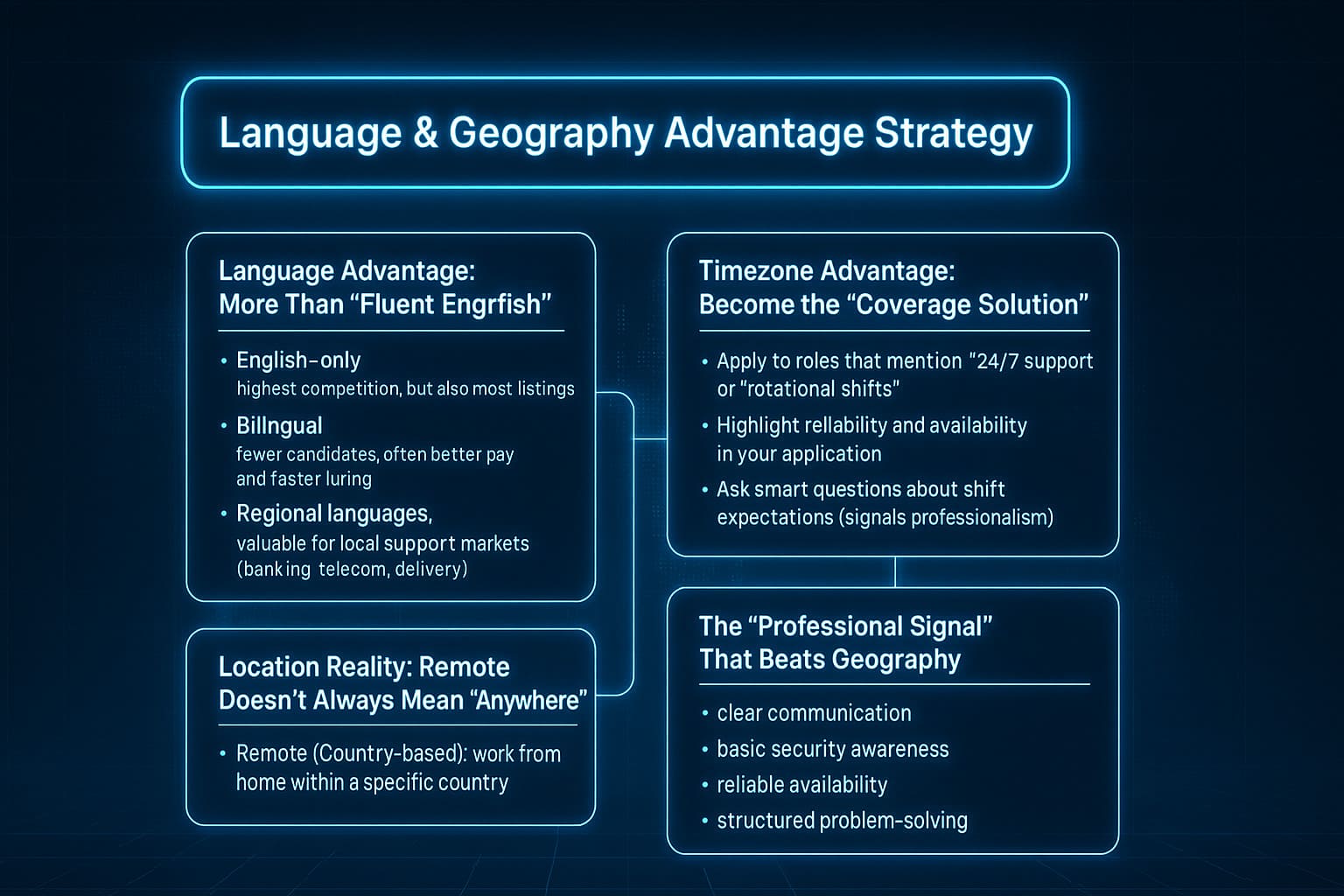
This section is where many people gain an unfair advantage. Remote support hiring is not only about skills— it’s also about coverage. Companies need agents who can serve customers across timezones and languages. If you understand this, you can position yourself more strategically.
1) Language Advantage: More Than “Fluent English”
English is the most common requirement, but multilingual ability can dramatically increase your options. Some companies pay more for agents who can handle two languages, especially in high-demand markets.
- English-only: highest competition, but also the most listings
- Bilingual: fewer candidates, often better pay and faster hiring
- Regional languages: valuable for local support markets (banking, telecom, delivery)
If your spoken English feels “not perfect,” don’t overthink it. Many roles are chat/email-based where writing clarity matters more than accent. Focus on clear, simple sentences, not fancy vocabulary.
2) Timezone Advantage: Become the “Coverage Solution”
Companies regularly struggle to fill certain shifts: late-night support, weekend coverage, or holiday coverage. If you can handle these shifts reliably, you instantly become more valuable.
- Apply to roles that mention “24/7 support” or “rotational shifts”
- Highlight reliability and availability in your application
- Ask smart questions about shift expectations (signals professionalism)
You don’t need to love night shifts forever. But taking them early can open doors to better internal roles later.
3) Location Reality: Remote Doesn’t Always Mean “Anywhere”
Some roles are remote but restricted by country due to legal, tax, or data policies. So “remote” can mean:
- Remote (Country-based): work from home within a specific country
- Remote (Regional): limited to certain timezones or regions
- Fully global remote: less common, but exists for contractors
Your best strategy is to apply to both: country-based stable roles (higher chance) and global contractor roles (higher flexibility).
4) The “Professional Signal” That Beats Geography
Even when geography matters, professionalism travels. If you can demonstrate:
- clear communication
- basic security awareness
- reliable availability
- structured problem-solving
You become easier to trust—which is the real currency in remote hiring.
Beginner Mistakes That Kill Remote Careers
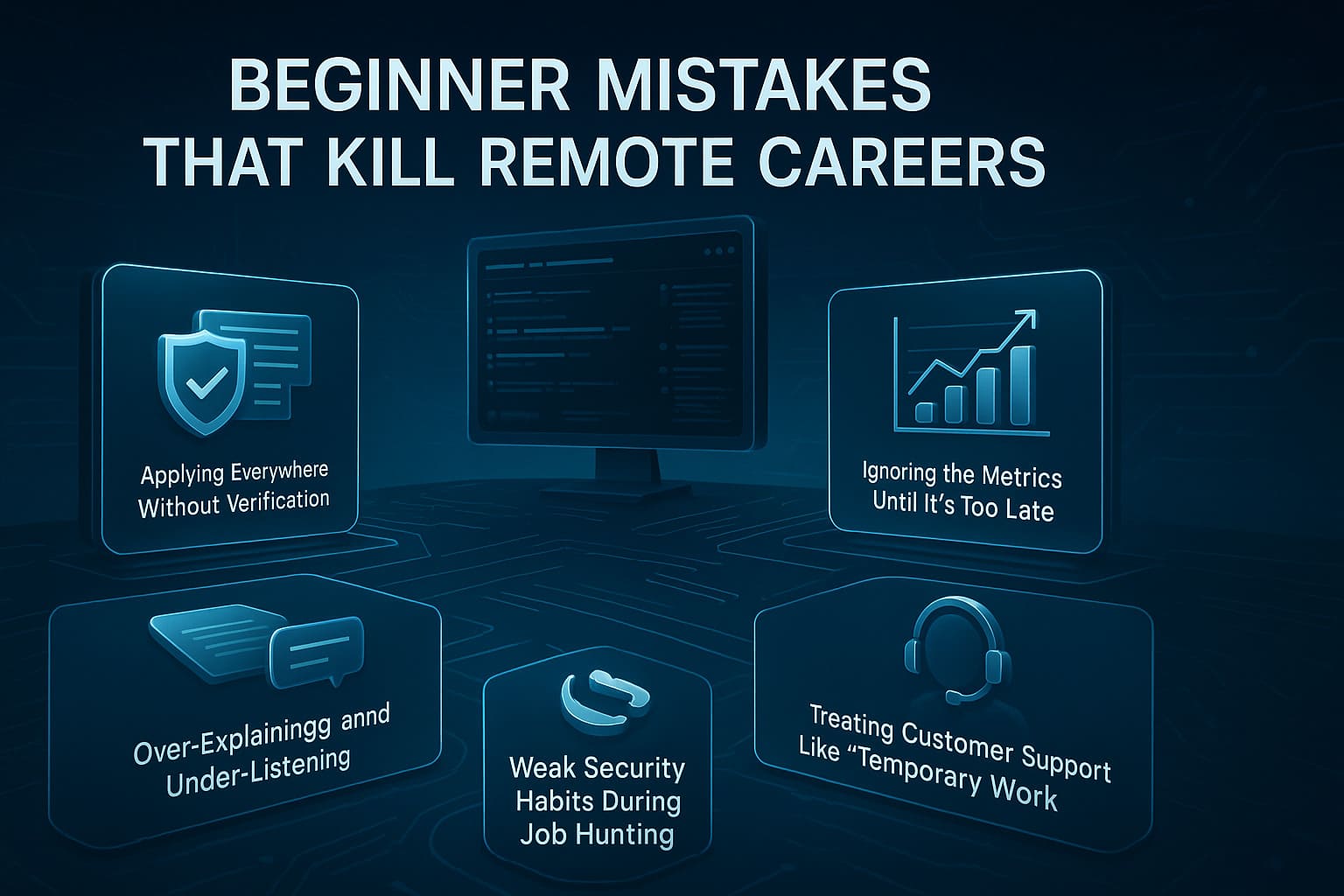
Many people fail in remote work not because they lack skill, but because they lack a system. Here are common beginner mistakes that quietly destroy opportunities—and how to avoid them.
1) Applying Everywhere Without Verification
Mass applying feels productive, but it increases your scam exposure. Instead, build a “verified shortlist” approach: apply only to roles that pass your legitimacy routine.
- Use official career pages when possible
- Cross-check jobs on reputable platforms
- Avoid “DM-only hiring” and “instant hire” offers
For anti-scam guidance, you can reference: FTC guidance on job scams .
2) Over-Explaining and Under-Listening
In support, customers don’t want a lecture. They want clarity and progress. Beginners often type too much and miss the real issue.
- Summarize the problem in one sentence
- Ask one focused question at a time
- Confirm resolution before closing
3) Ignoring the Metrics Until It’s Too Late
Metrics aren’t “punishment.” They’re the scoreboard. If you ignore them, you might be surprised during evaluations.
- Track your own patterns (what issues slow you down)
- Use templates and knowledge base smartly
- Escalate earlier when stuck
4) Weak Security Habits During Job Hunting
Remote job seekers are targets. Reused passwords and weak account security can lead to account takeovers or phishing.
- Use unique passwords for every job portal
- Enable 2FA whenever possible
- Avoid saving passwords in insecure notes
Use ByteToLife’s free tools to strengthen your basics:
5) Treating Customer Support Like “Temporary Work”
Even if this isn’t your forever career, treat it professionally. Support roles often lead to: QA, team leadership, training, operations, and customer success. Those paths open faster when you show reliability early.
- Be consistent with attendance and punctuality
- Document clearly (your notes help your future self)
- Seek feedback and improve one metric at a time
A simple professional mindset can turn a “job” into a long-term remote career asset.
Frequently Asked Questions (FAQ)
Remote customer support jobs involve assisting customers through chat, email, or phone without working from a physical office. These roles focus on problem-solving, account assistance, and customer satisfaction rather than sales or promotions.
Yes, many remote customer support jobs are legitimate and offered by established companies or BPO providers. However, scams exist, so it is essential to apply only through official career pages and verified job platforms.
Common red flags include requests for upfront payments, interviews conducted only via messaging apps, instant hiring without screening, and job offers that are not listed on the company’s official website.
Many entry-level customer support roles do not require prior experience. Employers typically value communication skills, reliability, and a willingness to learn more than formal job history.
Earnings vary based on role, location, language skills, and company. Most legitimate positions offer hourly pay with possible performance bonuses, providing stable and predictable income rather than high-risk payouts.
Typical requirements include a stable internet connection, a computer with an updated operating system, a noise-canceling headset, and a quiet workspace. Legitimate employers clearly state these requirements upfront.
No. Many roles are chat-based or email-based, especially for SaaS and digital services. Phone support is common, but not the only option.
Some roles are fully global, while others are restricted to specific countries or regions due to legal, tax, or data protection requirements. Job listings usually specify location eligibility.
Yes. Many professionals grow into senior agent, QA, team lead, or operations roles. Customer support experience also transfers well into customer success, product, and operations careers.
Clear communication, empathy, problem-solving, time management, and basic technical literacy are the most important skills. Consistency and reliability often matter more than advanced technical knowledge.
Payment is usually made via payroll systems, bank transfers, or trusted payment platforms. Legitimate companies never ask employees to handle payments or transfer money on their behalf.
Remote customer support is often more stable than many online income models, though it may offer slower growth. It suits people who value predictability, structure, and long-term reliability over high-risk opportunities.
Conclusion : A Stable Path in the Online Income Landscape
Remote customer support is not a shortcut, and it is not built on hype. It is built on real needs, real systems, and real accountability. That is precisely why it remains one of the most sustainable ways to earn income online—especially in an environment where trends change quickly and scams move faster than ever.
Once you understand how legitimate roles work, how hiring decisions are made, and how to protect yourself from false opportunities, the noise fades. What remains is a clear path: apply selectively, work professionally, secure your access, and improve consistently. Those who treat customer support as a serious remote profession are the ones who stay employed, get promoted, and gain long-term flexibility.
You do not need to chase every new online income trend to move forward. In many cases, stability comes from choosing work that solves real problems every day. Remote customer support does exactly that—and for those who approach it with discipline and intention, it can become a reliable foundation in the digital economy.