
Artificial Intelligence (AI) has become an essential part of modern digital life. What once felt like an experimental technology is now deeply integrated into everyday workflows, helping individuals write better, work faster, and manage information more effectively. From freelancers and students to entrepreneurs and remote professionals, AI tools are reshaping how productivity is defined.
Rather than replacing human intelligence, AI works as an augmentation layer. It handles repetitive tasks, analyzes large volumes of information, and offers structured suggestions—allowing people to focus on creativity, strategic thinking, and meaningful decision-making. Understanding how AI supports everyday productivity is no longer optional; it is a practical skill for the digital age.
This article explores how AI tools enhance daily work, improve communication, support creativity, and help individuals build sustainable productivity systems.
The Rise of AI in Everyday Digital Work
One of the most noticeable changes brought by AI is its presence in routine digital tasks. Activities such as organizing files, drafting text, managing calendars, and prioritizing work can now be supported by intelligent automation.
AI excels at recognizing patterns across data and behavior. This allows it to anticipate user needs, reduce unnecessary decisions, and streamline workflows. For knowledge workers, reducing decision fatigue is just as important as saving time.
Common Daily Tasks Enhanced by AI
- Drafting emails, messages, and documents
- Organizing digital files and notes
- Managing reminders and schedules
- Summarizing long articles or reports
- Extracting key insights from text
By integrating these capabilities into daily routines, AI helps users maintain focus and consistency without feeling overwhelmed by information overload.
AI for Writing and Content Creation
Writing is one of the most widely adopted use cases for AI tools. From blog posts and academic papers to marketing copy and social media captions, AI assists users throughout the content creation process.
It is important to clarify that AI does not think creatively like humans. Instead, it analyzes language patterns and probabilities. When guided properly, this makes AI a powerful writing assistant rather than a replacement for original ideas.
How AI Improves the Writing Process
- Generating topic ideas and outlines
- Improving grammar, spelling, and clarity
- Rewriting sentences for better tone
- Summarizing long-form content
- Adapting text for different audiences
Many writers use AI to overcome writer’s block and speed up drafting while maintaining editorial control. For a focused breakdown of tools and best practices, see: AI Writing Tools: A Practical Guide for Smarter Content Creation.
Technology publications such as Wired have also discussed how AI-assisted writing improves efficiency when paired with human review.
AI-Powered Email and Digital Communication
Email and digital messaging remain central to professional communication, yet managing messages can quickly consume hours each day. AI-powered communication tools help reduce this burden by assisting with drafting, sorting, and prioritizing messages.
Over time, these systems learn from user behavior, making responses more natural and context-aware. The result is faster communication without sacrificing clarity or professionalism.
Benefits of AI in Communication Management
- Context-aware reply suggestions
- Automatic inbox categorization
- Spam and phishing detection
- Follow-up reminders for unanswered messages
For professionals handling high volumes of communication, AI reduces mental strain while improving responsiveness and consistency.
Smarter Scheduling and Time Management with AI
Time management is a universal challenge, especially for remote workers, freelancers, and multitaskers. AI scheduling tools help users plan their days more realistically by analyzing deadlines, task duration, and availability.
Unlike static calendars, AI-driven planners adapt dynamically. When priorities change, schedules adjust automatically—reducing the need for constant manual reorganization.
What AI Scheduling Tools Can Do
- Automatically prioritize tasks
- Rearrange schedules in real time
- Allocate time for focused, deep work
- Balance meetings and personal tasks
These features are particularly valuable for individuals managing multiple responsibilities simultaneously.
AI in Data Analysis and Decision Support
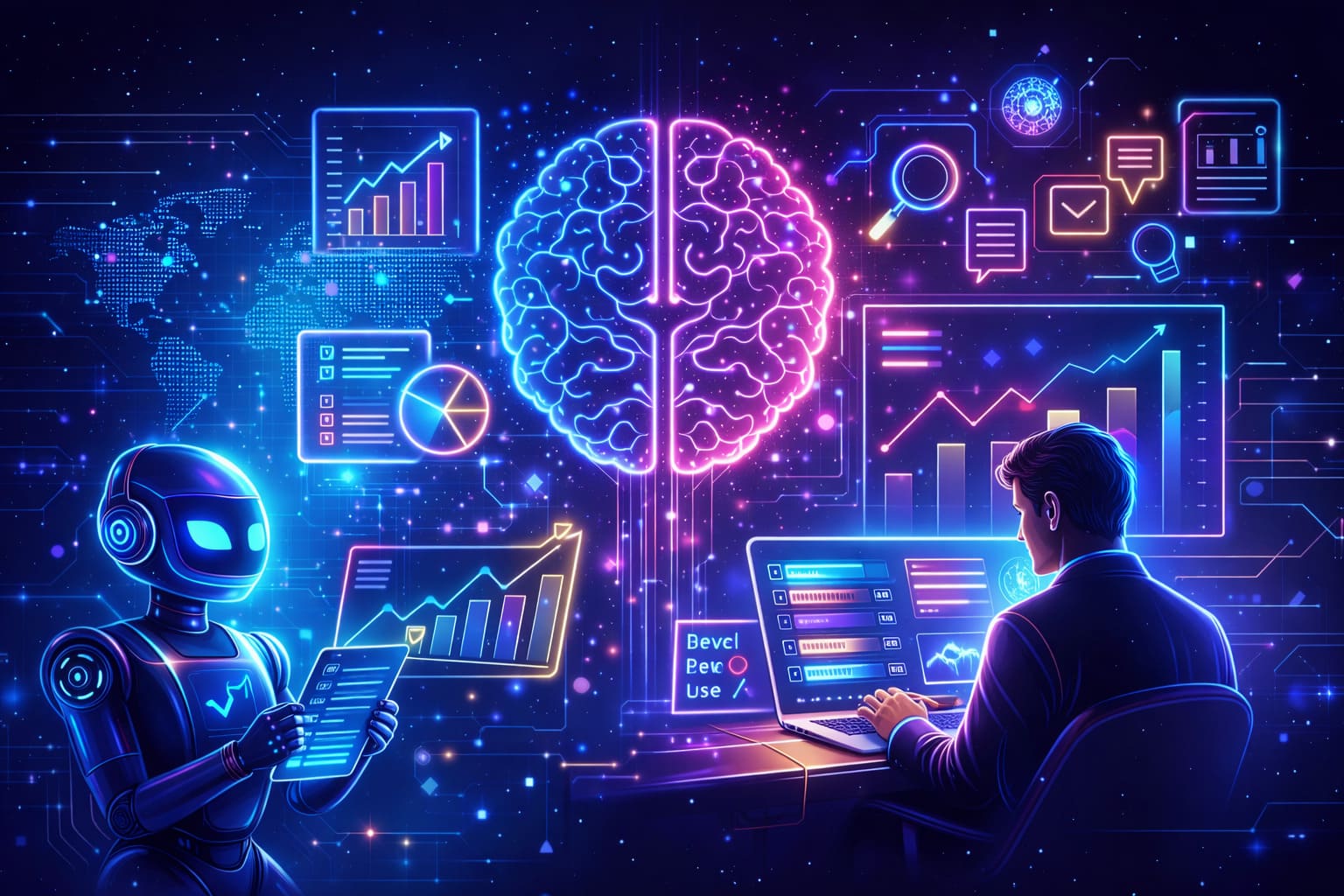
AI-powered analytics tools have made data-driven decision-making accessible to everyday users. Instead of manually analyzing spreadsheets or reports, users can rely on AI to identify trends, patterns, and anomalies.
This capability allows individuals and small teams to make informed decisions without advanced technical expertise.
Everyday Use Cases for AI Analytics
- Tracking productivity and performance metrics
- Analyzing audience or user behavior
- Identifying inefficiencies in workflows
- Supporting planning and goal setting
AI accelerates understanding, but final decisions still require human judgment and contextual awareness.
AI-Enhanced Collaboration and Teamwork
As remote and hybrid work environments become more common, AI plays an increasing role in collaboration platforms. These tools help teams communicate clearly, reduce misunderstandings, and save time during meetings.
Collaboration Features Powered by AI
- Real-time transcription and note-taking
- Automatic meeting summaries
- Language translation for global teams
- Sentiment analysis to improve communication tone
Platforms such as Microsoft Copilot and Notion AI demonstrate how AI improves teamwork when embedded directly into workflows.
Reducing Cognitive Load and Preventing Burnout with AI
Modern digital work requires constant decision-making, which can lead to cognitive overload and burnout. AI helps reduce this mental strain by handling micro-decisions automatically.
How AI Reduces Mental Fatigue
- Suggesting next actions instead of forcing decisions
- Summarizing information instead of requiring full review
- Reducing context switching between tools
- Automating repetitive planning tasks
By minimizing decision fatigue, AI supports long-term productivity and mental well-being.
Personalized Productivity Through Adaptive AI
One of AI’s strongest advantages is personalization. By learning from habits and preferences, AI tools adapt workflows to individual users over time.
This transforms productivity from a generic system into a tailored experience that evolves with changing needs.
Examples of Personalized AI Support
- Task recommendations based on behavior
- Focus prompts during high workload periods
- Content ideas aligned with user goals
- Custom automation rules
Research published by Nature suggests that adaptive AI systems can improve efficiency when used thoughtfully.
Responsible Use of AI for Sustainable Productivity

Despite its benefits, AI must be used responsibly. Overreliance on automation can weaken critical thinking if outputs are not reviewed carefully.
Best Practices for Responsible AI Use
- Always review AI-generated content
- Verify facts and sources independently
- Avoid publishing raw AI output
- Maintain human oversight and accountability
Responsible AI usage builds trust, credibility, and long-term value—especially for professionals and content creators.
The Future of AI in Everyday Productivity
As AI continues to evolve, its integration into daily workflows will become more seamless. Voice interfaces, context-aware assistants, and multimodal systems will further reduce friction between humans and technology.
The purpose of AI is not to eliminate effort, but to redirect it—allowing people to focus on creativity, insight, and meaningful work.
AI Tools as a Long-Term Productivity Strategy
Many people use AI tools only during busy periods or when deadlines are tight. While this can be helpful, the real value of AI appears when it becomes part of a long-term productivity strategy. AI works best when integrated into daily habits rather than treated as a temporary shortcut.
Instead of asking AI to “do everything,” effective users define clear roles for AI within their workflow. For example, AI can handle planning, drafting, and summarization, while humans focus on judgment, creativity, and decision-making.
How to Integrate AI into Daily Workflows
- Use AI every morning to outline daily priorities
- Draft first versions of content with AI assistance
- Summarize meetings or research automatically
- Review and refine outputs manually before final use
When used consistently, AI becomes a productivity layer that supports habits instead of replacing them.
The Psychological Impact of AI-Assisted Productivity
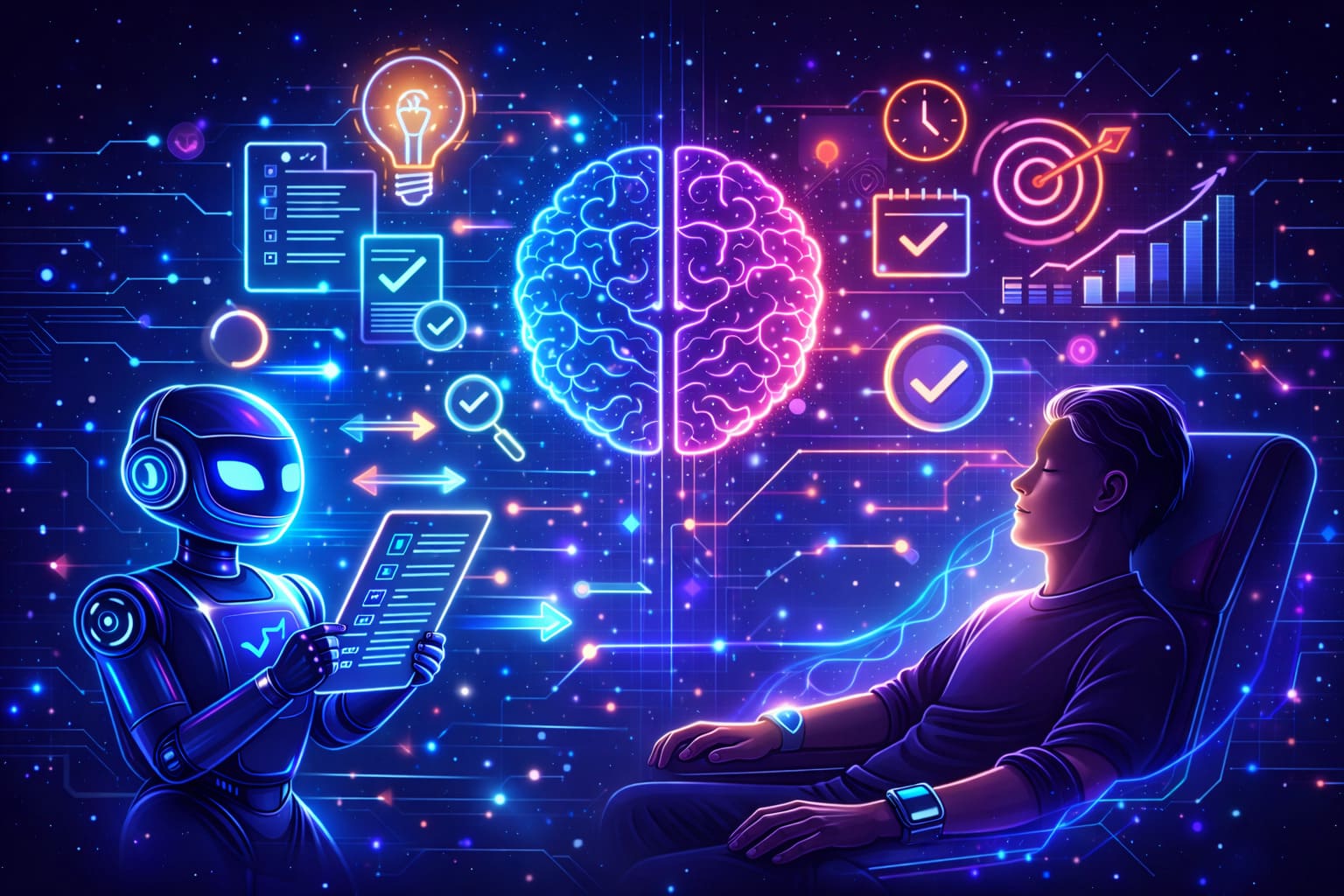
Beyond efficiency, AI tools influence how people feel about work. Modern digital environments often demand constant attention, leading to stress and cognitive fatigue. AI helps reduce this pressure by removing unnecessary mental effort from routine tasks.
By handling micro-decisions—such as what to work on next or how to structure information—AI reduces decision fatigue. This allows users to preserve mental energy for deeper thinking and creative problem-solving.
Psychological Benefits of Using AI Tools
- Reduced stress from decision overload
- Improved focus during deep work sessions
- Greater confidence when starting complex tasks
- Lower risk of burnout over time
When used mindfully, AI supports not only productivity but also mental well-being.
AI for Learning, Skill Development, and Knowledge Work
AI tools are increasingly used for learning and skill development. Instead of passively consuming information, users can interact with AI to clarify concepts, summarize materials, and explore ideas from different perspectives.
For knowledge workers, this transforms learning into an active, on-demand process. AI can explain complex topics in simpler terms, generate examples, or highlight gaps in understanding.
Practical Learning Applications of AI
- Summarizing educational materials
- Breaking down complex concepts
- Generating practice questions
- Supporting research and exploration
This makes AI a powerful companion for continuous learning, especially in fast-changing digital fields.
Balancing Automation and Human Creativity
A common concern about AI is the fear of losing creativity. In reality, creativity often increases when repetitive barriers are removed. AI helps eliminate friction at the early stages of creation, allowing ideas to flow more freely.
However, creativity still depends on human judgment, emotion, and context. AI provides raw material, but humans shape meaning.
Best Practices for Creative AI Use
- Use AI for brainstorming, not final decisions
- Always refine outputs with personal insight
- Combine multiple ideas instead of using one response
- Maintain a clear creative goal
This balance ensures AI enhances creativity without diminishing originality.
Ethical and Quality Considerations When Using AI

As AI tools become more accessible, ethical usage becomes increasingly important. Publishing unreviewed AI-generated content can lead to misinformation, low-quality work, or credibility issues.
Responsible users treat AI as an assistant, not an authority. Human oversight remains essential.
Guidelines for Ethical AI Use
- Always verify facts and claims
- Avoid copying AI output verbatim
- Maintain transparency when appropriate
- Respect originality and intellectual integrity
Following these principles helps build trust with audiences and ensures long-term sustainability.
Frequently Asked Questions (FAQ)
AI productivity tools are applications that use artificial intelligence to help users work more efficiently. They assist with tasks such as writing, scheduling, communication, data analysis, and organization by automating repetitive work and providing intelligent suggestions.
AI tools improve productivity by reducing manual effort, organizing information, prioritizing tasks, and minimizing decision fatigue. This allows users to focus on creative thinking, problem-solving, and meaningful work instead of routine tasks.
No. AI tools are designed to support creativity, not replace it. They provide ideas, structure, and suggestions, but human judgment, emotion, and originality remain essential for meaningful and high-quality work.
Yes, AI writing tools are safe when used responsibly. Users should always review, edit, and personalize AI-generated content to ensure originality, accuracy, and alignment with their own voice and intent.
AI helps reduce stress by handling repetitive tasks, organizing priorities, and minimizing constant decision-making. This lowers cognitive load and allows users to maintain focus and energy for longer periods of deep work.
Yes. Overreliance on AI without human review can reduce critical thinking and quality. AI works best as an assistant, while humans remain responsible for final decisions, creativity, and ethical judgment.
AI productivity tools are especially useful for freelancers, remote workers, content creators, students, and professionals who manage large amounts of information, communication, and tasks on a daily basis.
Beginners should start with one or two AI tools, use them for simple tasks like outlining or scheduling, and gradually integrate them into daily workflows. Reviewing outputs carefully helps build trust and effectiveness over time.
Conclusion: Working Smarter with AI, Not Harder
In a world that moves faster every day, productivity is no longer about doing more—it is about doing what truly matters. AI tools are not meant to replace human creativity, intuition, or judgment. Instead, they exist to reduce friction, ease mental overload, and give people back something increasingly valuable: clarity and time.
When used with intention, AI becomes a supportive partner rather than a controlling force. It quietly handles repetitive tasks, organizes complexity, and helps individuals focus on meaningful work. This allows people to think deeper, create better, and make decisions with confidence instead of constant pressure.
Those who learn to collaborate with AI—rather than fear it or depend on it blindly—will build healthier and more sustainable ways of working. True productivity is not measured by speed alone, but by balance, purpose, and the ability to grow alongside technology in an increasingly digital world.