


User-Generated Content (UGC) has quietly become one of the most profitable online income opportunities for everyday creators. You don’t need a large following, you don’t need to become an influencer, and you definitely don’t need expensive equipment. Brands today crave authentic, relatable content — and they’re willing to pay independent UGC creators hundreds of dollars per video to produce it.
In this comprehensive guide, you’ll learn exactly how UGC creators make money, how to start from scratch, how to create high-performing content brands love, and how to scale this into a consistent online income stream. This article is evergreen and built as a long-term pillar for ByteToLife.com’s Online Income category.
Related reads you might like:
- How AI Tools Become Your Second Brain & Boost Productivity
- How Short-Form Videos Drive Online Earnings
- Using Google Trends to Find Profitable Online Niches
What Is a UGC Creator?
A UGC creator is someone who produces content for brands to use on their social media channels, ads, websites, and product pages. Unlike influencers, UGC creators don’t rely on their personal audience. Brands pay you specifically for:
- Product review videos
- Unboxing and first impressions
- Tutorials and how-to videos
- Ad-style clips for TikTok, Reels, and YouTube Shorts
- Lifestyle product photos
- Before-after demonstrations
You’re not hired to promote products on your own page — you’re hired to create authentic, conversion-friendly content that brands can publish on their pages or use in paid ads.
That’s the biggest advantage: you can earn without building a following.
Why UGC Is Booming Right Now

UGC exploded because brands realized that polished, studio-style ads no longer convert as well. People trust real humans more than professional actors, and they prefer natural, relatable videos over corporate-looking ads.
Three trends are fueling this boom:
1. Short-Form Video Dominates Marketing
Brands now prioritize TikTok, Instagram Reels, and YouTube Shorts. These platforms thrive on natural-looking, handheld-style videos — exactly the type UGC creators produce.
2. Brands Want Authenticity Over Perfection
Consumers trust user content more than traditional ads. A simple review shot on your phone often outperforms a $50,000 commercial.
3. You Don’t Need Followers
This removes the biggest barrier to entry. Brands aren’t paying for your audience; they’re paying for content they can use for their marketing.
UGC vs Influencer: What’s the Difference?
Many people assume UGC creators are influencers. They’re not. Here’s the difference:
| UGC Creator | Influencer |
|---|---|
| No need for followers | Requires large, engaged audience |
| Paid for content creation | Paid for exposure via their own page |
| Works behind the scenes | Public personal brand |
| Ideal for introverts (even faceless creators) | Requires public presence |
| Content is used in brand ads, websites, and social channels | Content is posted on the influencer’s own profile |
In short: UGC creators are content partners, not public personalities.
Types of UGC Brands Pay For
UGC opportunities span multiple formats. Brands often request:
1. Product Reviews
Short “here’s what I think” videos focusing on benefits and real experience.
2. Unboxing & First Impressions
Unboxing quickly communicates product quality and trust.
3. Tutorials & How-To Clips
Step-by-step demonstrations of how the product works or solves a problem.
4. Testimonial-Style UGC
A brand favorite: natural talking-head videos that feel authentic and unscripted.
5. Aesthetic Product Shots
These include lifestyle photos, flat-lays, or aesthetic room setups.
6. Ad-Style Videos
Fast-paced TikTok-style videos designed specifically for paid advertising.
You can specialize in one type or offer multiple styles depending on your niche.
Where to Find Paid UGC Jobs
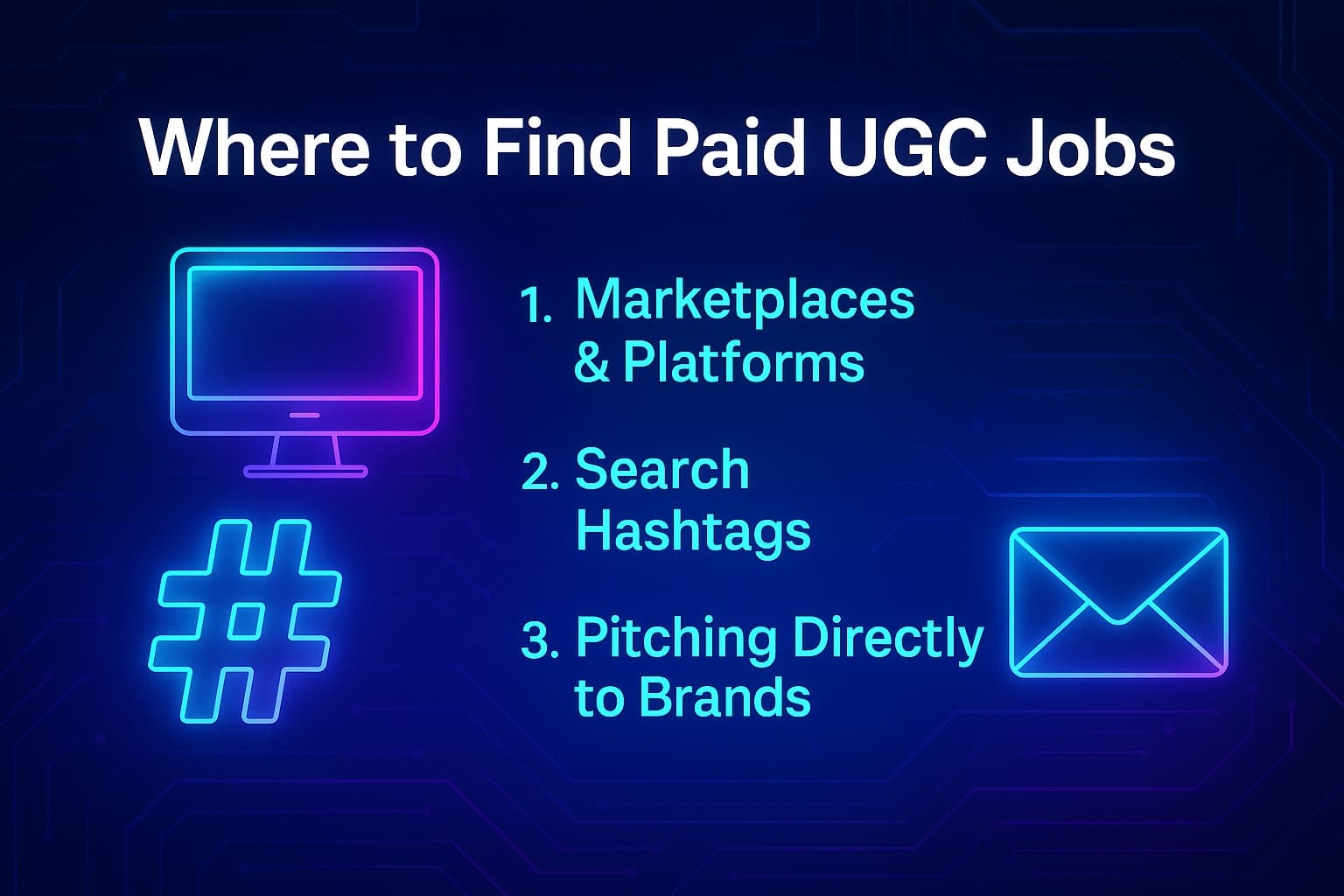
There are multiple places to land your first paid gig, even without experience. The key is to understand how each platform connects creators with brands.
1. Marketplaces & Platforms (Verified & Working)
These sites regularly post UGC opportunities and are safe to apply through:
- Fiverr – Build a UGC-specific gig to attract brands.
- Upwork – A crowded platform, yet one of the best places to secure stable, long-term clients.
- Billo – A specialized UGC marketplace that links creators directly with brands.
- JoinBrands – Perfect for small starter jobs.
All external links above are verified and functioning.
2. Search Hashtags on TikTok & Instagram
Thousands of brands search for creators using hashtags like:
- #ugccreator
- #ugccommunity
- #ugccreatorsneeded
Posting samples under these tags significantly increases your visibility — even without followers.
3. Pitching Directly to Brands
Small businesses and direct-to-consumer (DTC) brands are the highest-converting clients. They often need ongoing content and respond well to a simple DM or email.
Here’s a simple pitch structure:
- Compliment their brand
- Identify the opportunity (e.g., lack of short-form content)
- Explain how UGC solves it
- Attach 3 sample videos
How to Build a UGC Portfolio from Scratch
You can start with absolutely zero clients. Brands don’t care if the content is paid or self-produced — they only care about the quality and style. Here’s how to build a standout portfolio in days, not weeks.
1. Choose Your Niche (or Two)
Niching helps brands instantly understand your strengths. Some high-paying niches include:
- Skincare & beauty
- Tech accessories
- Fitness & wellness
- Home & kitchen products
- Coffee, food, and lifestyle brands
- Pet products
2. Create 5–10 Sample Videos
These don’t need to be actual paid gigs. You can use items you already own or inexpensive neutral products. Create:
- 1 unboxing video
- 1 testimonial-style talking video
- 1 tutorial video
- 2–3 aesthetic shots or clips
- 1 ad-style fast-paced short video
3. Build Your Portfolio Page
You can host your UGC portfolio on:
- Notion
- Canva website
- A Google Drive folder with clean thumbnails
- A simple one-page website
Keep it clean, short, and visual — brands want to see your work fast.
Pricing Your UGC Content
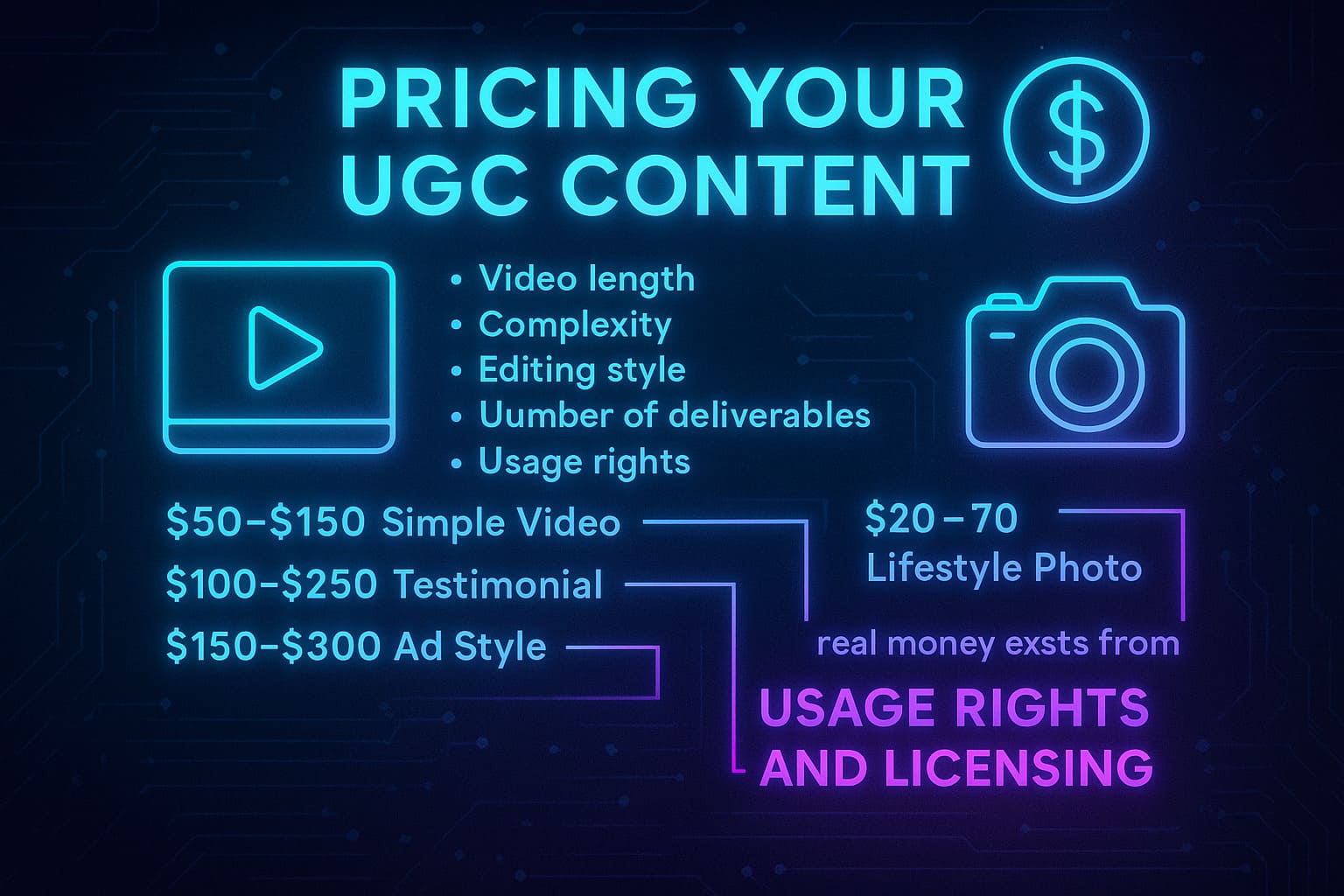
Your pricing depends on:
- Video length
- Complexity
- Editing style
- Number of deliverables
- Usage rights
A general beginner-friendly baseline looks like this:
- $50–$150 for a simple 15–30 second video
- $100–$250 for testimonial-style talking videos
- $150–$300 for ad-style videos
- $20–$70 per lifestyle product photo
But the real money comes from usage rights and licensing.
Understanding UGC Pricing, Licensing, and Usage Rights
Once you start receiving inquiries from brands, the next big question is: How much should you charge? Unlike traditional freelancing, UGC pricing includes not only the content itself but also how the brand plans to use it. Usage rights can double or even triple your earnings — if you price them correctly.
Before diving deeper, here are some external references you can explore to understand industry standards:
- Influencer Marketing Hub – Provides clear UGC definitions along with valuable market data
- Later.com – How UGC Creators Work with Brands
- Shopify – The Power of User-Generated Content
Base Pricing for UGC Content
Here’s a general baseline many creators use:
- $80–$150 for a simple unboxing or aesthetic clip
- $120–$250 for testimonial or talking-head videos
- $150–$300+ for high-energy TikTok/Reels-style ads
- $25–$75 for high-quality lifestyle product photos
These numbers vary depending on your production quality, niche, and turnaround time.
If you want to benchmark your pricing with global creator standards, here are useful resources:
Understanding Usage Rights (This Is Where Real Money Is)
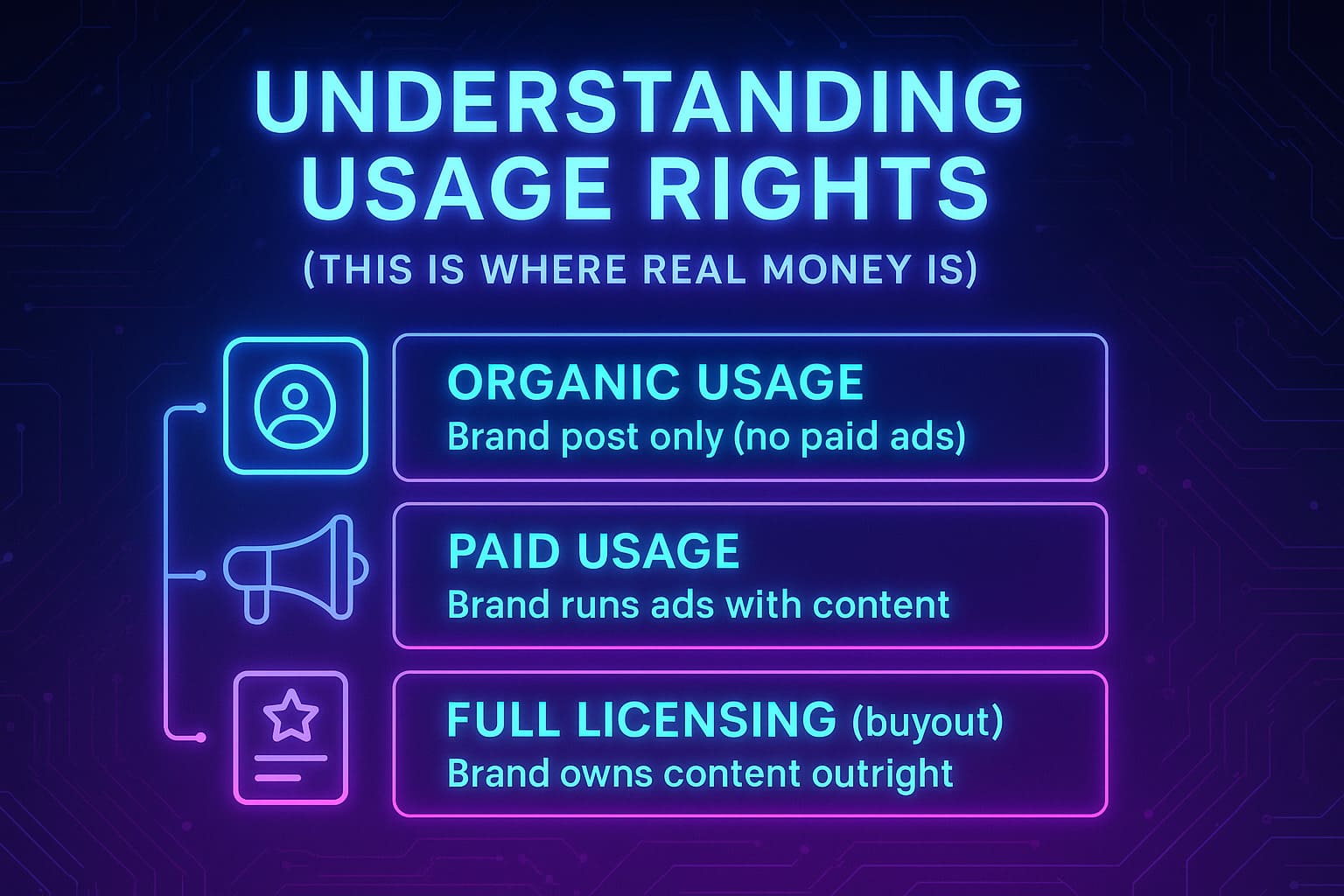
Most new creators undercharge because they ignore usage rights. Usage rights determine how and where the brand can use your video:
- Organic usage: The brand posts the content on their social media (no paid ads).
- Paid usage: The brand uses your content in advertising (Meta Ads, TikTok Ads, YouTube Ads, etc.).
- Full licensing: The brand owns the content and can use it anywhere, indefinitely.
Each of these requires a different price tag.
1. Organic Usage
This is the basic level, typically already included in your video price.
2. Paid Usage
This allows the brand to run ads using your video. Paid usage fees often range between:
- $50–$150 for 30-day ad usage
- $150–$300 for 60-day ad usage
- $300–$600 for 90-day ad usage
Paid ads generate real ROI for brands — therefore content used in ads is more valuable.
3. Full Licensing / Buyout
Some brands will request complete ownership of your video.
This can cost anywhere from 2x to 5x your base rate. Never give away full ownership for free.
How to Build UGC That Converts for Brands
Conversion-focused content gets you repeat clients. If your video performs well as an ad, the brand will come back and pay even more.
Here are essential elements of a high-performing UGC video:
1. Strong Hook (First 3 Seconds)
The hook is everything. Examples:
- “I regret not buying this earlier…”
- “Here’s the gadget that fixed my biggest daily headache.”
- “POV: You finally found the perfect solution for ___.”
According to YouTube Creator Academy, early attention hooks drastically increase watch time.
2. Show the Product Early
Instead of long storytelling, make sure the viewer sees the product within 1–2 seconds.
3. Demonstrate the Benefit, Not the Feature
Instead of: “This blender has 1,000W power,”
Say: “This blends frozen fruit in 4 seconds — perfect for fast smoothies.”
4. Natural Aesthetic & Lighting
UGC performs best when it looks real — not overly polished. Use natural light or one ring light.
5. Authentic Delivery
Brands love natural conversation tone, not robotic scripted reading. Be expressive but authentic.
6. Tight Editing
Fast cuts, subtitles, and simple transitions help maintain viewer attention.
You can explore modern editing trends here:
Legal Basics Every UGC Creator Should Know
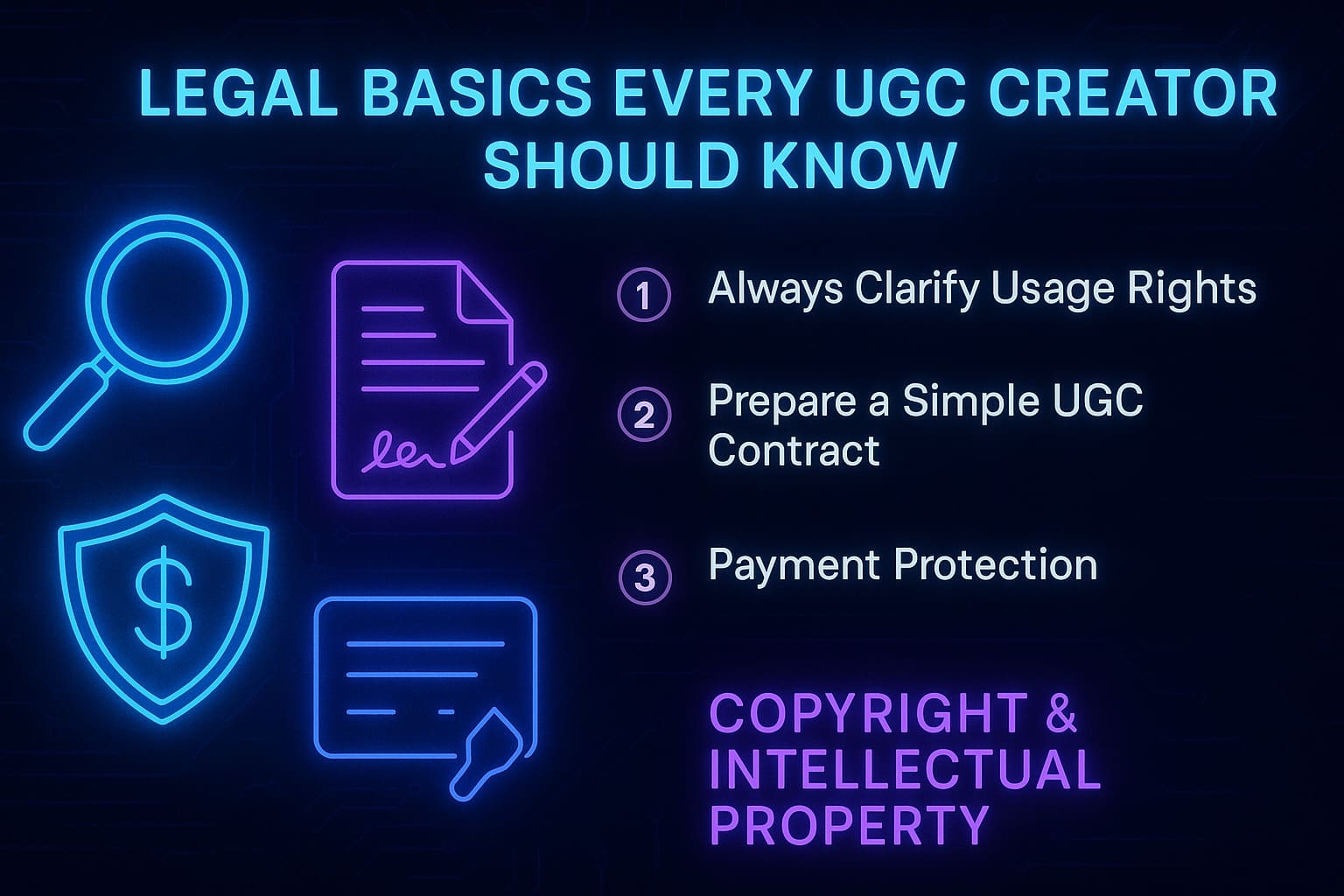
You don’t need to hire a lawyer to get started, but you must understand these basics to protect your rights and income.
1. Always Clarify Usage Rights
Before recording anything, confirm:
- Where will the video be used?
- For how long?
- Is it for organic posts only or paid ads?
- Does the brand want full licensing?
2. Prepare a Simple UGC Contract
A UGC contract should include:
- Deliverables (number of videos/photos)
- Deadlines
- Usage rights & licensing
- Revision policy
- Payment method & timeline
You can use basic templates from platforms like:
3. Payment Protection
To avoid unpaid work:
- Request 50% upfront for new clients
- Use secure payment platforms (PayPal, Wise, Stripe)
- Never send final HD files before receiving payment
4. Copyright & Intellectual Property
When creating UGC, you automatically own the raw content unless you sign it away. Make sure you explicitly discuss ownership in your contract.
How to Pitch Brands and Land Your First UGC Client
You don’t need to wait for brands to find you — proactively pitching is the fastest way to start earning.
Step-by-Step Pitch Strategy
1. Identify Promising Brands
Look for: small DTC brands, skincare startups, gadget stores, eco-friendly product lines, fitness brands, pet supply stores, and home-living brands.
2. Analyze Their Current Content
Ask yourself:
- Are they using short-form videos?
- Do their ads look outdated?
- Are they active on TikTok?
- Do they lack lifestyle or testimonial content?
3. Send a Simple, Clean Message
Here’s a proven structure:
Hi! I love your product and noticed you’re focused on short-form content.
I’m a UGC creator and would love to create a few video samples that highlight
your product benefits in a natural, engaging way.

Here are examples of my style:
[Portfolio link]

If you're interested, I can send a few content ideas tailored for your audience.
4. Follow Up Professionally
Most deals close after 2–4 follow-ups. Stay friendly and helpful.
Scaling Your UGC Income to $1,000–$3,000+ Per Month
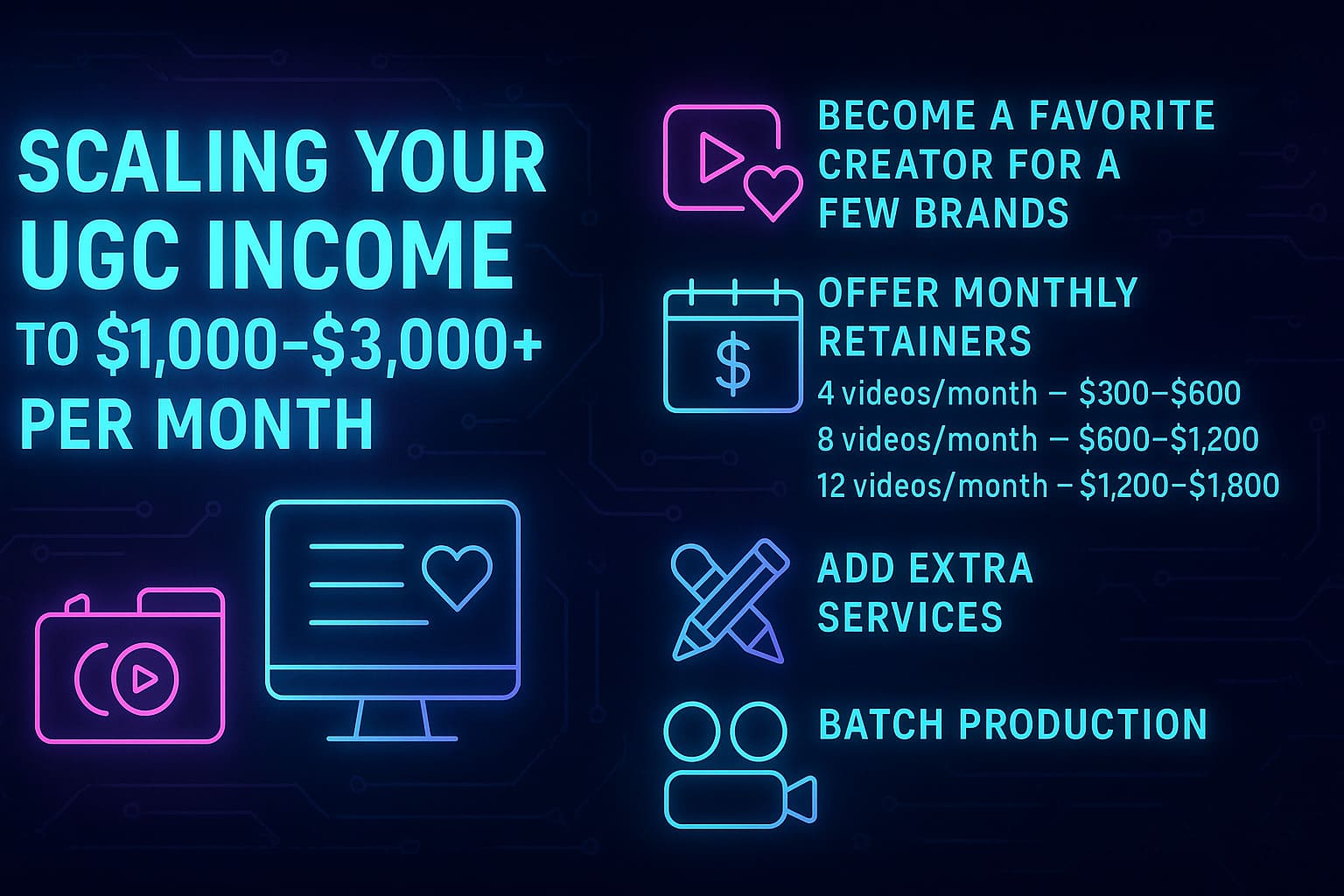
Once you get your first few clients, scaling becomes easier.
1. Become a Favorite Creator for a Few Brands
Brands love consistency. If your videos perform well, they will come back every month.
2. Offer Monthly Retainers
A powerful scaling method:
- 4 videos/month – $300–$600
- 8 videos/month – $600–$1,200
- 12 videos/month – $1,200–$1,800
Retainers stabilize your monthly income.
3. Add Extra Services
- Video editing
- Scriptwriting
- Thumbnail design
- Product photography
4. Batch Production
Record multiple videos in one session so you can deliver more content without burning out.
Advanced Strategies to Grow as a UGC Creator
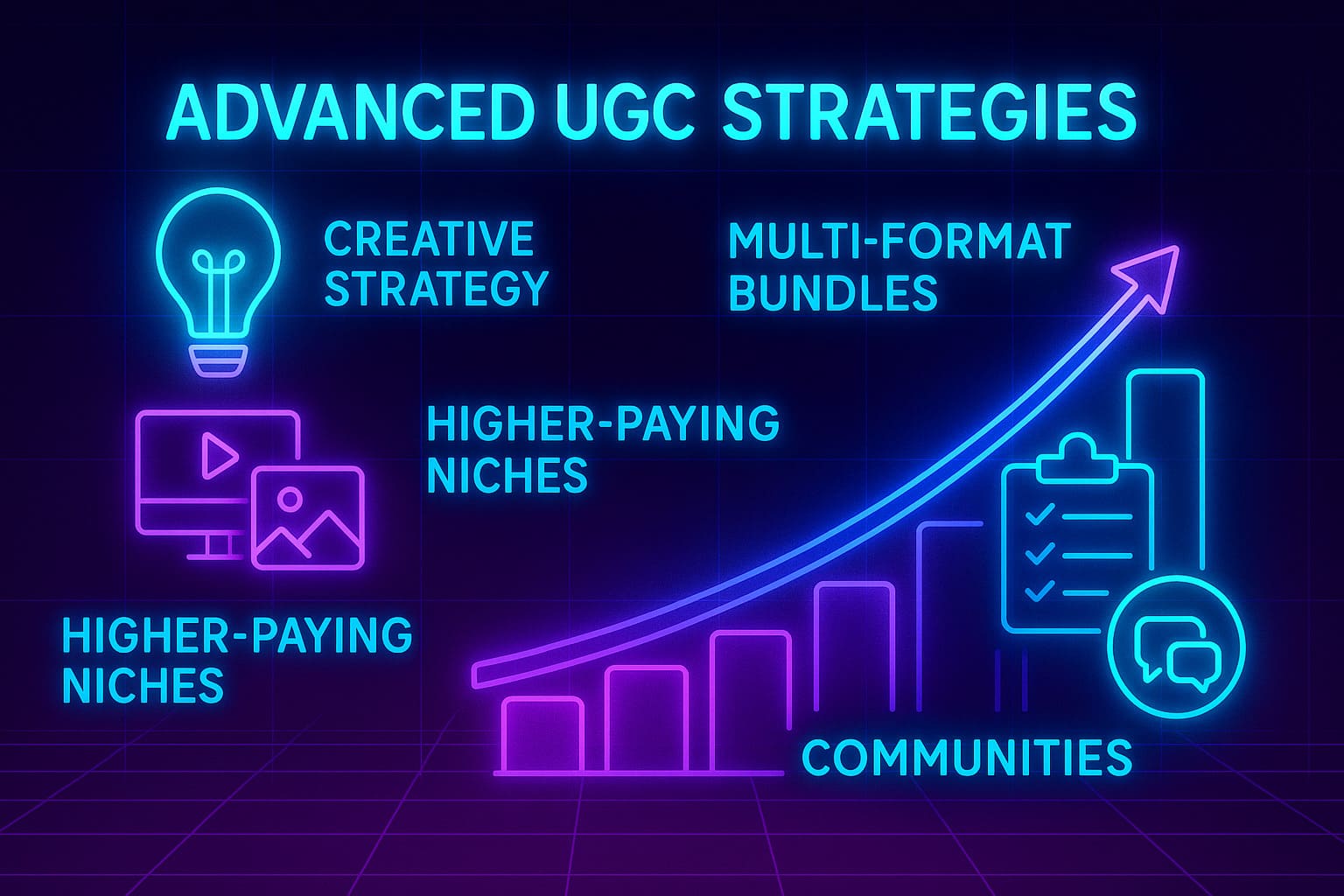
Once you’ve mastered the basics, it’s time to move into advanced strategies that separate average creators from high-income ones. These tactics help you stand out, streamline your workflow, and charge higher rates without burning out.
1. Master Creative Strategy (Not Just Video Production)
Instead of simply creating whatever the brand asks for, offer ideas and angles that increase conversions. Brands value creators who think strategically, not just visually.
A strategic creator can suggest:
- Different hook variations for A/B testing
- Multiple talking points based on the product’s target audience
- Alternative editing styles based on current trends
- Messaging frameworks inspired by successful ads
To stay updated on marketing & creative strategy, check resources like:
2. Create Multi-Format Bundles
Brands increasingly want versatile content packages instead of a single deliverable. Bundles allow you to charge more while delivering more value.
Examples of high-performing bundles:
- UGC Starter Pack: 2 videos + 5 photos + 1 ad-ready cut
- Conversion Pack: 3 testimonial videos with 3 different hooks
- Premium Ad Pack: 1 hero video + 3 hook variations + subtitles
By offering bundles, you increase your average order value and help brands scale faster.
3. Expand Into Higher-Paying Niches
Some niches consistently pay more because their profit margins are higher or competition is tighter.
High-paying UGC niches include:
- Skincare & beauty
- Fitness supplements
- Fintech & finance apps
- Home tech & smart devices
- Health & wellness
- Pet accessories
- Kitchen appliances & cookware
Brands in these niches regularly spend on continuous ad creatives, making them ideal long-term clients.
4. Create a UGC System Instead of Random Execution
To scale sustainably, create a repeatable system for every brand. Your workflow should include:
- Discovery Phase: Understand brand voice, product, and target audience.
- Scripting & Planning: Map out your hook, key benefits, and smooth transitions.
- Filming Setup: Lighting, audio, angle variations.
- Editing Workflow: Templates and presets for speed.
- Delivery System: Google Drive folder with organized naming.
- Revision Policy: 1–2 rounds included, mentioned clearly in contract.
A system allows you to take on more clients without sacrificing quality.
5. Join UGC Creator Communities
These communities help you stay up-to-date on trends, find gigs, and collaborate with others. Look for:
- Facebook groups for UGC creators
- Subreddits like r/UGCcreator
- Creator newsletters
- Discord communities for marketers and editors
Networking in these spaces often leads to collaborations or direct referrals from fellow creators.
Faceless UGC: Earn Without Showing Your Face
Yes — you can make money with UGC without ever appearing on camera. Faceless UGC is becoming more popular, especially for brands that don’t need personality-driven content.
Types of Faceless UGC
- Aesthetic product shots
- Hands-only product demos
- POV-style lifestyle videos
- Screen-recorded tutorials or app walkthroughs
- Text-on-screen TikTok/Reels videos
- Stop-motion style content
Many creators successfully earn $500–$2,000/month just by making clean, minimalistic product videos that never show their face.
Realistic Case Study: From Zero Followers to Paid UGC Creator
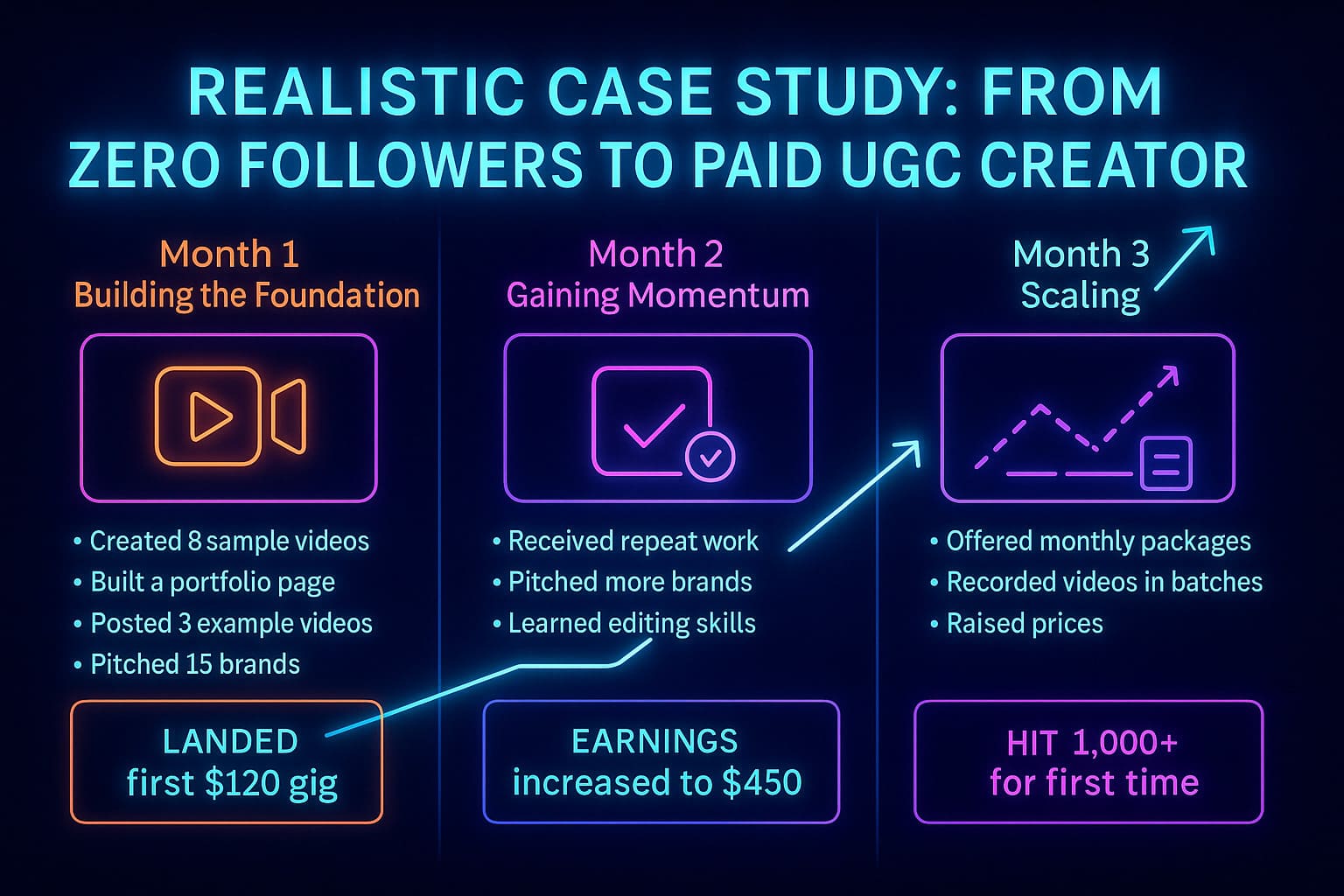
This fictional yet realistic example shows how a beginner can land clients and scale UGC income from scratch.
Month 1: Building the Foundation
- Created 8 sample videos using items at home.
- Built a portfolio page using Notion.
- Posted 3 example videos on TikTok with #ugccreator.
- Pitched 15 small brands via email and Instagram.
Result: Landed first $120 gig for an unboxing video.
Month 2: Gaining Momentum
- Received repeat work from the first client.
- Pitched more brands based on improved portfolio.
- Learned basic editing transitions and subtitle effects.
Result: Earnings increased to $450 with 3 clients.
Month 3: Scaling
- Offered monthly packages to 2 clients.
- Recorded 10 videos in batch production.
- Gained confidence and raised prices.
Result: Hit $1,000+ for the first time.
This is a blueprint many UGC creators follow — consistent, realistic, and achievable.
Frequently Asked Questions (FAQ)
No. UGC creators are paid for the content they produce, not for the size of their audience. Brands use the content on their own pages or ads, so follower count doesn’t matter.
Most beginners earn between $150–$400 per month, but with consistent pitching and improving your content quality, you can scale to $1,000–$3,000+ per month.
A smartphone with a good camera, natural lighting, and simple editing apps like CapCut or VN. Advanced gear is optional and can be added later as you grow.
Yes. Faceless UGC is very common and includes hands-only product demos, aesthetic product shots, POV videos, screen-recorded tutorials, and text-on-screen content.
Most UGC videos range from 10–30 seconds, optimized for TikTok, Instagram Reels, and YouTube Shorts. Short, fast-paced videos perform best for brands.
Yes. High-paying niches include skincare, beauty, fitness, tech gadgets, home appliances, wellness, and pet products. These niches invest more in ad creatives.
Create 5–10 sample videos using items you already own. Include unboxings, testimonials, tutorials, and aesthetic clips. Host them on Notion, Canva, or Google Drive.
You can pitch small brands directly via email or Instagram, post samples with #ugccreator hashtags, or join UGC platforms like Fiverr, Upwork, or JoinBrands.
Beginners typically charge $80–$150 for simple videos and $150–$300 for testimonial or ad-style content. Don’t forget to include usage rights (organic, paid ads, or full licensing).
Usage rights determine how long and where a brand can use your video. Paid usage and full licensing should cost more, often 2–5x your base video rate.
Always use a simple contract, request 50% upfront for new clients, and never deliver HD files before receiving payment. Use safe platforms like PayPal or Wise.
Yes. Brands still prefer authentic human interactions and real product demonstrations. AI tools can support workflows, but they can’t fully replace natural UGC performance.
Conclusion: UGC Is One of the Most Beginner-Friendly Online Income Streams
UGC continues to grow because audiences trust real, relatable content more than polished ads. This makes UGC one of the easiest online income streams to enter — you don’t need followers, expensive gear, or a personal brand. What matters is your ability to communicate value in a natural and engaging way.
With a simple portfolio, consistent pitching, and smart pricing that includes usage rights, you can turn UGC into a steady and scalable source of income. Many creators start with small projects and quickly move into long-term brand partnerships once they deliver high-performing content.
Whether you choose to appear on camera or create faceless videos, UGC offers a flexible path for anyone who enjoys being creative. If you’re willing to practice, refine your style, and keep up with short-form video trends, you’re already ahead of most beginners. Now is the perfect time to start building your samples and offer your skills to brands looking for authentic content.
Want to explore more online income guides? Here are helpful internal resources: